2026 Top Manufacturers | Brace, Adapt, Grow
Tariffs, affordability and a sluggish housing market challenge window and door manufacturers. Here’s how the industry is pushing forward anyway.
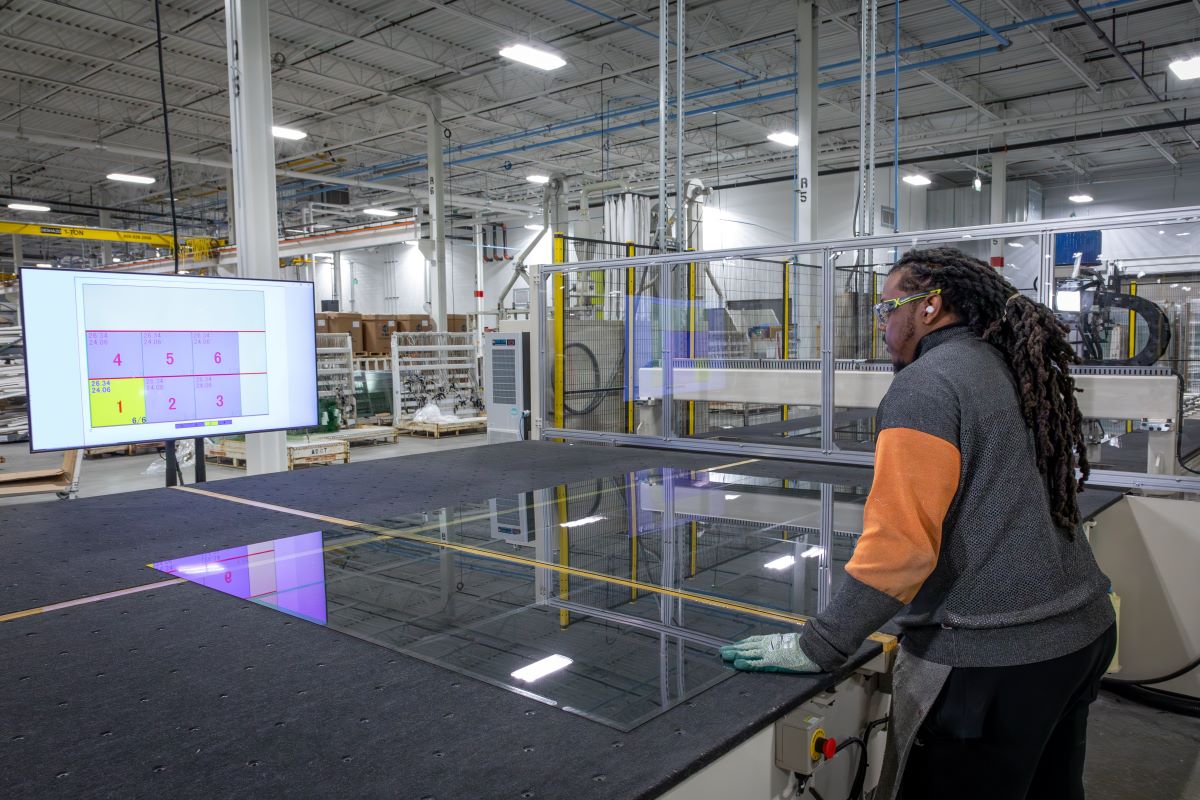
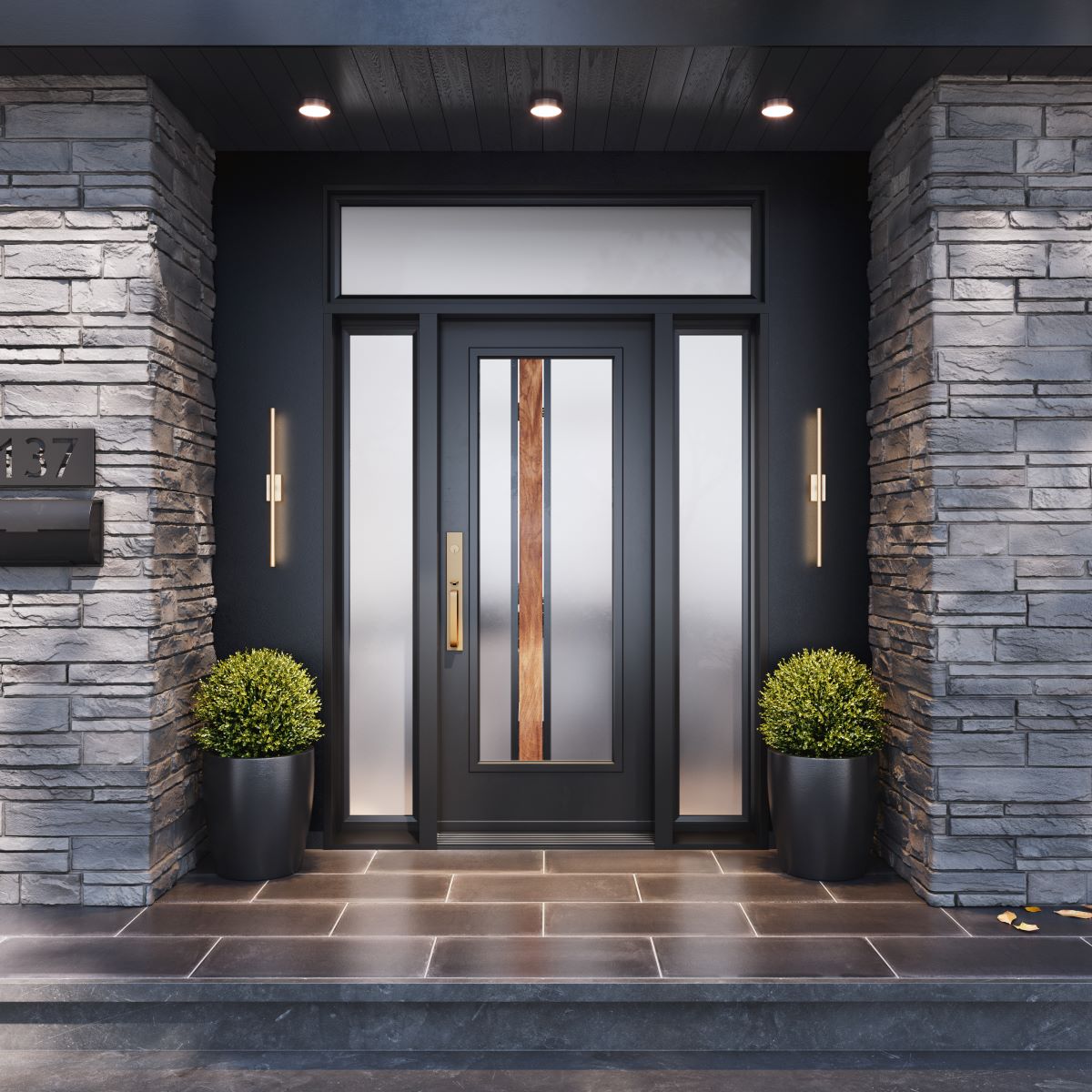
Photo courtesy of YKK AP America
Tariffs, inflation, affordability and costs continue to stress the industry, according to the 2026 Window + Door Top Manufacturers report. Despite the tough market, nearly all Top Manufacturers say their sales exceeded or were steady compared to the previous year and most expect at least a modest increase in 2026.
Product development marches on, companies explore automation as needed and labor retention challenges are nearly universal. Read on for an overview of the macroeconomic picture, including data from the Window & Door Market Survey in partnership with John Burns Research and Consulting, and new data and insights from Window + Door’s 2026 Top Manufacturers survey.
The 2026 Top Manufacturers Report & List
- Growth
- Products and Materials
- Labor
- Automation
- Forward Focus
- The Top Manufacturers List
A comprehensive list of North America's manufacturers of residential windows, doors, skylights and related products, organized by region.
The Big Picture
By the Numbers
The macroeconomic backdrop remains complex. Although mortgage rates have declined from nearly 7% to around 6%, housing affordability stays low. Home prices rose 130% in the past 13 years and the housing cost-to-income ratio is well above historical norms at 31.4%, said Chris Beard, vice president of building products research at John Burns Research and Consulting, during a Thirsty Thursday webinar by the National Glass Association in March. Consumer sentiment fell in 2025 and is dragging down new construction and big-ticket remodeling.
Further, unsold finished single-family inventory is at its highest level since 2009, resulting in slow housing starts. JBREC forecasts a 2% decline in single-family starts and a 9% decline in multifamily starts in 2026 before a gradual recovery through 2029.
Builder confidence for newly built single-family homes fell in April to its lowest level since September 2025, according to the National Association of Home Builders/Wells Fargo Housing Market Index, reflecting economic uncertainty and rising building material costs. “With oil prices higher in the U.S., 62% of builders reported suppliers have increased building material costs due to higher fuel prices, including gas and diesel,” says NAHB Chief Economist Robert Dietz. “Energy costs make up approximately 4% of residential construction material input and service costs. With near-term economic risks elevated, 70% of builders reported challenges pricing homes given uncertainty about material costs.”
Meanwhile, material and labor inflation has driven the average remodeling project to $31,000 today, a 41% increase from 2019’s average $22,000 ticket. Layer in financing, and costs are up 45%. Despite homeowners sitting on a record $35 trillion in home equity, most are not tapping into it thanks to consumer uncertainty and tariff anxiety, said Beard.
Demographics continue to shift, affecting both the housing market and the available labor pool. Working-age population growth is expected to turn negative in 2026 for the first time and net immigration is projected to fall 81-84% compared to 2022-2024 levels. Strong population growth, however, in the prime first-time homebuyer and move-up buying age range of 30-54 and aging-in-place (70-plus) could support long-term demand.
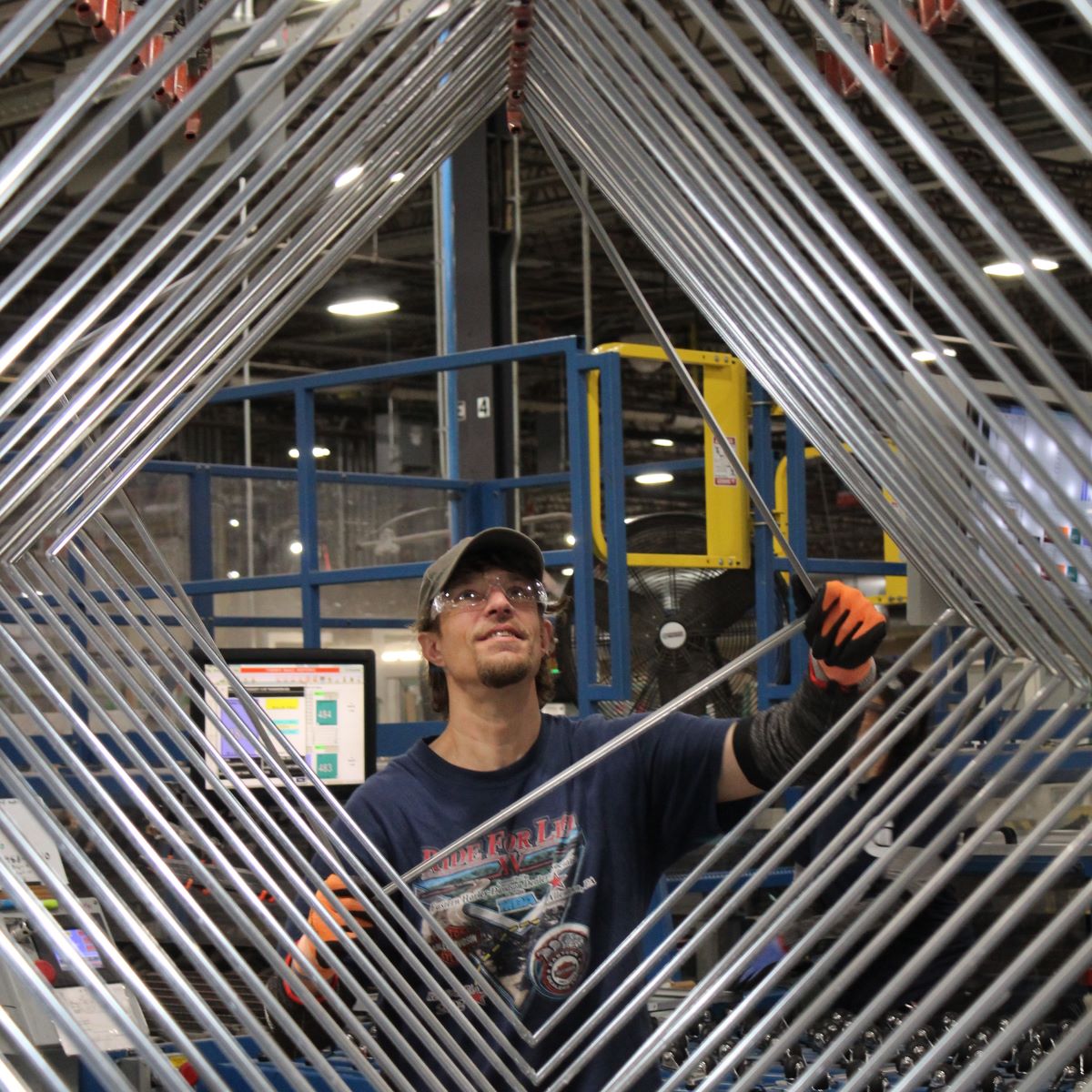
Photo courtesy of Crystal Window & Door
Window & Door Market Survey
Beard also presented the results of the Q4 2025 Window & Door Market Survey and 2025 full-year results during the webinar. The survey found shipment volumes declined through most of 2025 and backlogs shrank, with 42% of respondents reporting decreased backlogs in Q4.
For Q1 2026, no respondents expected higher shipments versus Q4 — a first in the survey's history. Full-year 2026 shipment growth is projected at just 3.3%, and revenue growth at 5.6% (versus missed expectations of ~8% in 2025).
Material costs are rising faster than labor costs—reversing a prior trend—largely driven by tariff uncertainty. One manufacturer respondent in the Window & Door Market Survey noted, “Tariffs and political uncertainty are killing the business. We need to return to free trade, a predictable business environment where we can properly forecast demand and labor needs.”
Full-year 2026 expectations are:
- Shipment growth forecast: 3.3%
- Revenue growth forecast: 5.6%
- Prior year expectation at same point in the survey cycle: shipments up 5.6%, revenue up nearly 8%
One webinar attendee asked what surprised Beard the most about the past year. “The resiliency of the higher-end consumer,” he replied. “And then also — what we've been through from interest rates and just how the builders have been able to adapt. What I hear from dealers on the frontline is: it's not great, it's not terrible. It's kind of just been humming along. And I think that really is a testimony to the industry.”
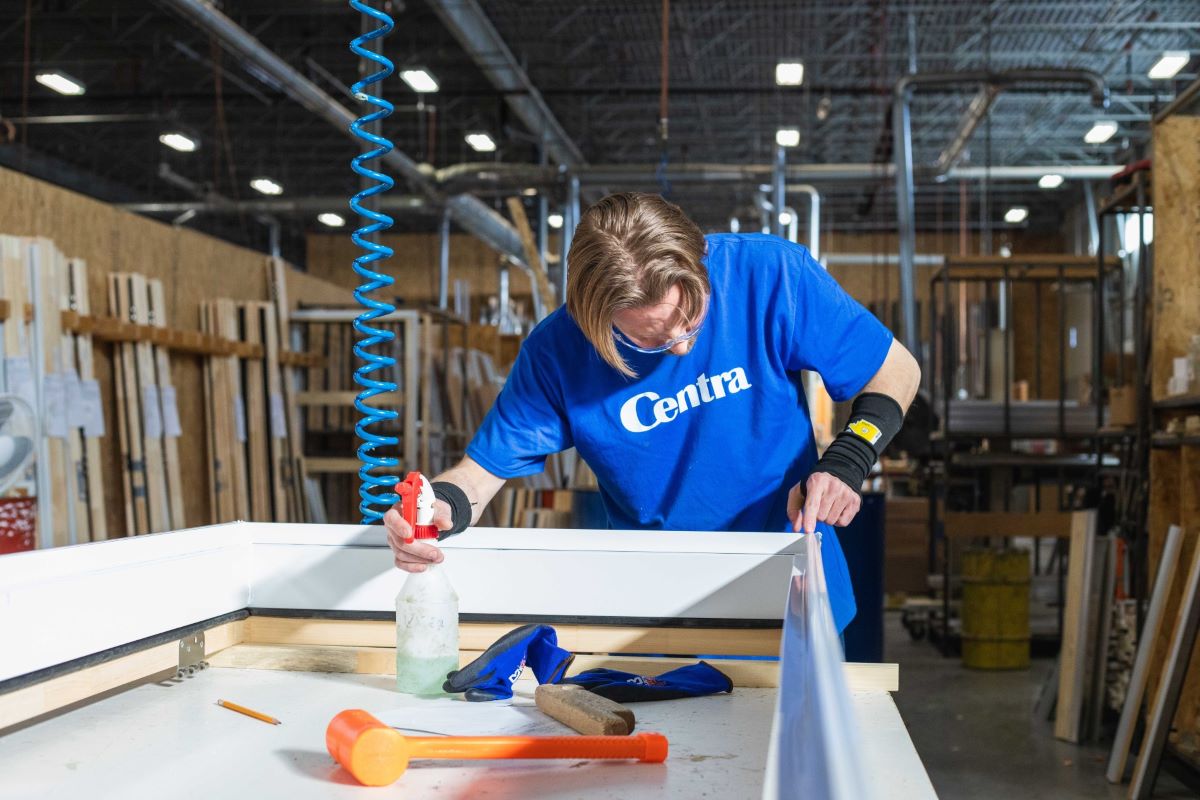
Photo courtesy of Centra Windows
Top Manufacturers Report
This year’s survey reflects input from national and regional manufacturers across the U.S. and Canada representing revenue levels from upwards of $1 billion per year to less than $15 million per year.
Learn more about the survey participants below.
Growth
Most (81%) survey respondents expanded capacity in 2025. Common methods included new and expanded facilities, adding machinery, hiring more staff, acquiring new customers, expanding product lines and adding shifts.
“Our recent capacity expansion has focused primarily on automation and expanded facilities,” wrote one company. “We added a new system to increase insulating glass unit production capacity. In addition, at the end of last year we expanded our facility by 20,000 square feet, allowing us to increase window inventory and support production of our foam-filled, energy-efficient 700 Series. Looking ahead, we expect to hire additional team members and may add shifts as needed to meet growing demand.”
Several survey respondents also noted an increased focus on replacement and retrofit products. Diversifying product mixes can help maintain stability. Kate Land, vice president of product and innovation at Cornerstone Building Brands, notes windows offer visible impact and performance benefits, both of which are primary considerations for consumers. “From a product mix standpoint, that reinforces the importance of having a variety of window and door options that can meet different consumer needs and code requirements across the market,” she says.
The survey also queried what areas of production companies seek to enhance. Answers included automation, quality control, more retrofit products, impact-rated product lines, black or other dark colors, and improved efficiency. Several companies are focusing on glass and fabrication, including insulating glass production. “Primarily, our insulated glass unit production will be enhanced through the addition of new fully automated machinery,” wrote one respondent.
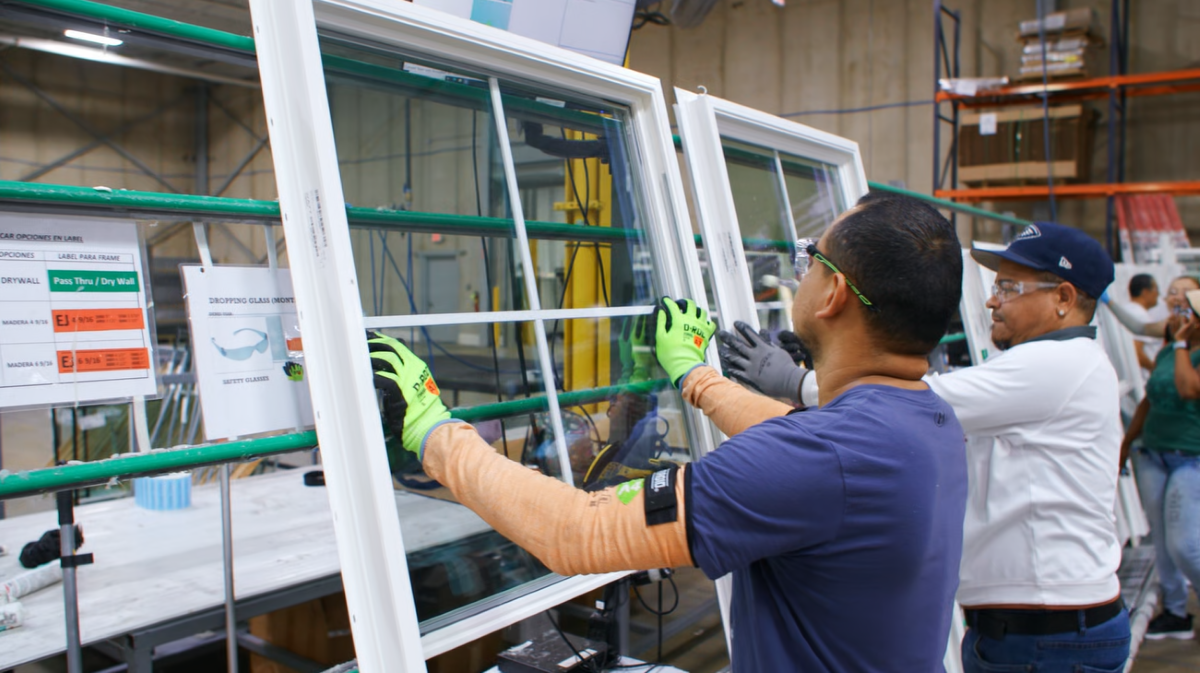
Photo courtesy of United Window & Door
Products and Materials
Responding manufacturers reported that customers are asking for energy-efficient products, larger windows and doors, and color options, all of which are indicative of design-oriented customers who have high expectations for performance and exacting design ideas. When asked which features of product design were most important, respondents say energy efficiency and design are of nearly equal importance (26% and 25%, respectively) in the product development space.
Josh Jensen, president, residential business, YKK AP America, recalls high-end aluminum and steel dominating exhibits at International Builders’ Show this year, which he says trends more toward a slim line, commercialized, storefront look.
While people are reluctant to leave their current homes to purchase new ones, Jensen thinks more homeowners will look at window and glass replacement. “Glass is the biggest thing,” he says about increasing a window’s efficiency. Low-emissivity glass is big, but new technologies are emerging around solar, auto-shading glass and more.
The industry is fragmented on smart and integrated products. About half of survey respondents sell them, are developing them or are researching them. Many still don’t see enough market demand to justify entering this space. Cornerstone Building Brands’ Land says that for smart products to gain more traction the homeowners need to clearly see the value, especially in today’s cost-conscious climate. “That means the technology needs to feel useful, intuitive and connected to something the customer already cares about, whether that’s convenience, comfort or better control over the home environment. When the experience feels simple and the benefit is easy to understand, there’s more opportunity for that part of the market to grow.”
After uncertainty about Energy Star’s future last year, in March the Environmental Protection Agency and Department of Energy signed a 10-year Memorandum of Agreement moving the Energy Star program to the DOE and potentially shielding the program from the previous EPA funding cuts. Regardless of the federal policy shifts that maintain the program, Jensen sees the program as worth maintaining. “With Energy Star, what really drives it for the end user—the homeowner, the builder—is ‘what's their benefit?’ Give me a tax break, give me an incentive. That's what drives it,” he says.
Jensen says as a company he anticipates continually moving forward, trying to regulate products and keeping Energy Star standards.
Cornerstone Building Brands’ Land says there is a balance between design preferences for more glass and larger windows and strong performance adhering to energy code requirements. “While there can certainly be tension when aesthetic desires challenge structural and energy performance requirements, leaning into technology and using the latest materials, design and application innovations is how we approach developing products that deliver both,” she says, further referencing how certain Cornerstone Building Brands lean into darker finishes and stronger aesthetics combined with advanced glass packages, foam-enhanced options and triple-pane configurations.
Only 10% of surveyed companies currently have Environmental Product Declarations for their products. The 90% who don’t cite a lack of necessity, need and demand for them. One company wrote, there is a “current lack of regulatory requirements, combined with limited internal resources to support the development process.”
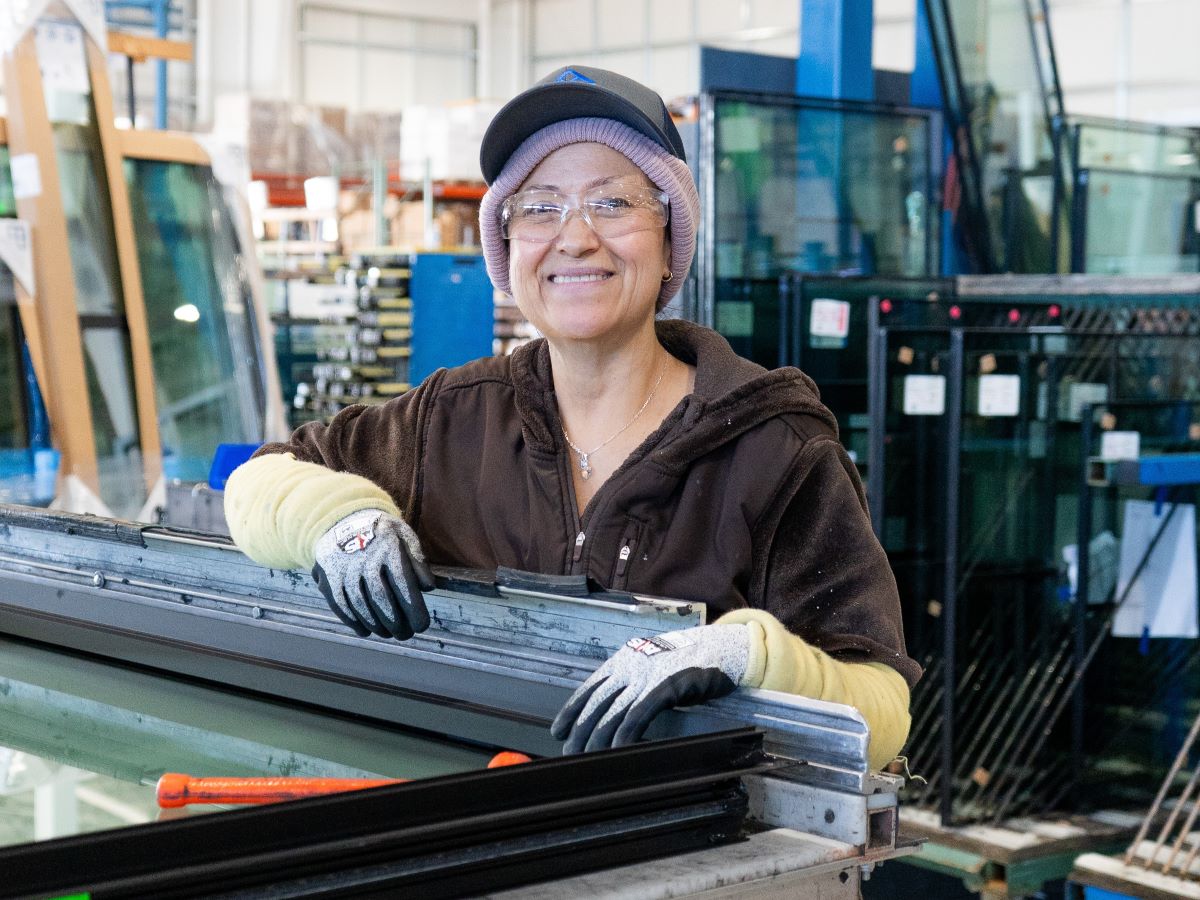
Photo courtesy of All Weather Architectural Aluminum
Labor
More than 400,000 manufacturing jobs go unfilled each month. That gap could reach nearly 2 million workers by 2033, according to data from the Manufacturing Institute and Deloitte. Finding new, skilled labor is an evergreen issue and one that continues to grow. Tied with recruitment, however, is employee retention. Lower-level production roles especially see high turnover rates.
Training itself is a time commitment and balance between time spent training and time spent doing the job. “Challenges can range from time constraints—balancing training with usual work responsibilities—and knowledge gaps, which necessitate more in-depth training,” wrote one company.
Knowledge sharing and documenting knowledge of tenured employees is critical, too. “This is less of a challenge and more of an area of focus for us,” wrote one company about the labor market. “With many years of experience across our workforce, we place a strong emphasis on ensuring new employees are welcomed and supported by tenured team members. Sharing institutional knowledge and fostering a collaborative environment where experienced employees actively help develop new hires is a key strength of our organization.” Another company noted there’s opportunity to standardize training approaches across locations to enhance consistency and overall employee onboarding experience.
Company culture and fostering an environment where workers take ownership of their tasks can also help retain employees. “While technical skills can typically be taught relatively easily, motivating new employees to take initiative and fully engage in training can be more challenging,” shares one company. “To address this, our supervisors have implemented processes that promote ownership and accountability. These include recognizing employees who proactively identify and resolve product issues before items leave the manufacturing floor, as well as offering a reliability bonus for team members who consistently arrive on time and remain focused throughout their shifts.”
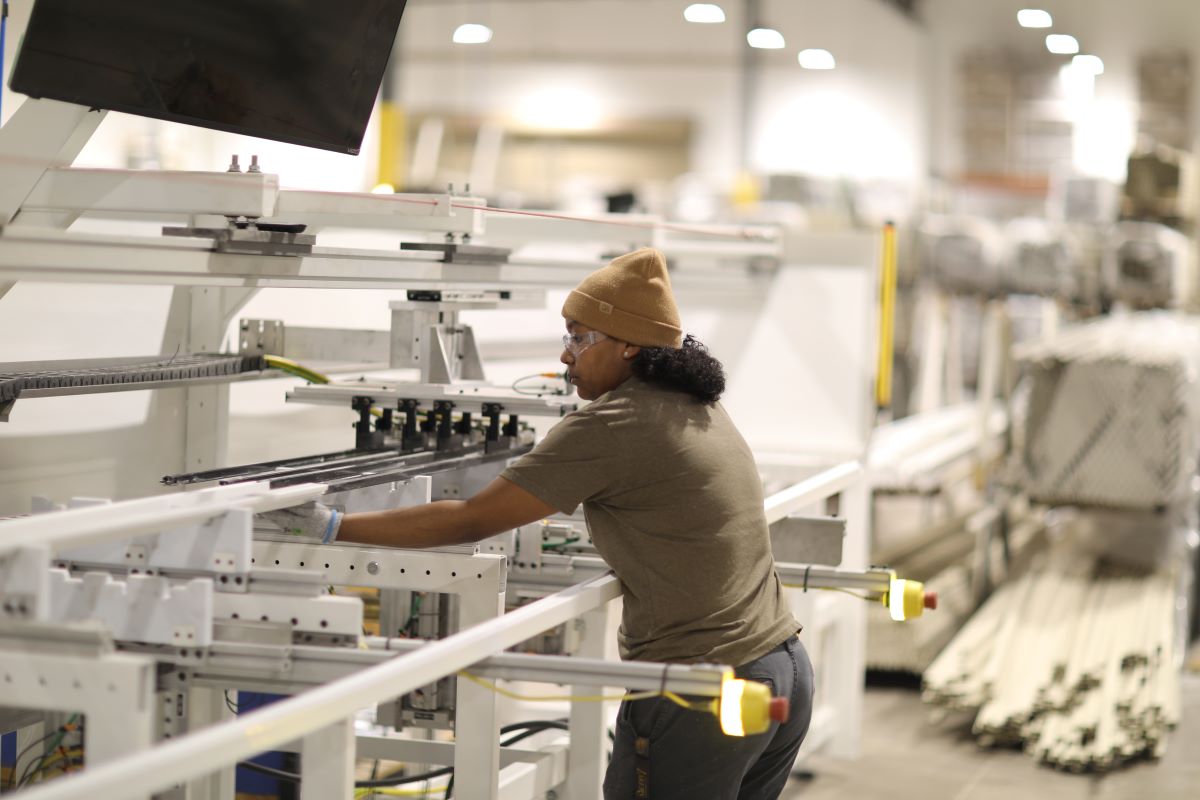
Photo courtesy of ABI Windows
Automation
Automation continues to be widespread, with most survey respondents using it in some capacity because of its benefits of increased output, cost savings and labor savings.
YKK AP’s Jensen said the company built one automated line that boosted overall efficiencies and productivity levels. The success of that first line led the company to discontinue an older line and transition that space to a new automated line that is on track to launch toward the end of 2026.
Return on investment dictates most automation investments. “We evaluate automation based on bottlenecks related to capacity and attendance issues,” said one respondent, while another one looks at “cost savings and how many employees we can move to more skilled positions.”
Artificial intelligence is widespread on the business and administration side with many companies leaning into it for marketing and communications. It remains rare on the manufacturing and operations side.
Although not widely adopted, AI has the potential to transform the manufacturing industry. Jay Timmons, president and CEO of the National Association of Manufacturers, said in his NAM State of Manufacturing Address this year that manufacturers should view AI as an additive to human capability. “Think about when electrification first reached our factory floors, requiring a fundamental redesign of the industry,” he said. “Think about when Ford created the assembly line and broadened production scale. Think about the dawn of robotics in the 1960s. At every step, manufacturing evolved. We created the capacity for people to make more things, more things faster, at greater scale. We created jobs in more sectors. AI represents that same opportunity.”
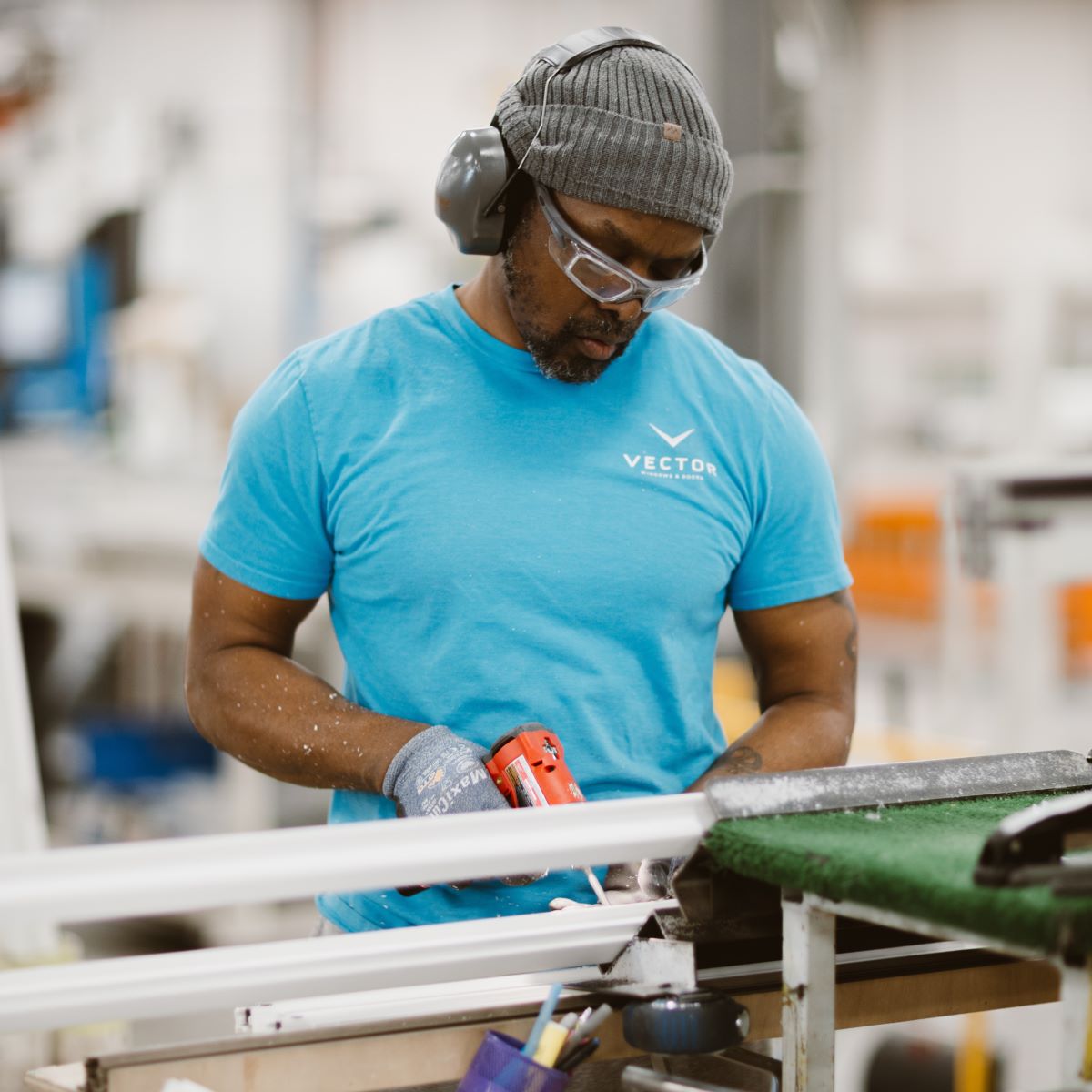
Photo courtesy of Vector Windows
Forward Focus
Material cost inflation, housing affordability and tariffs are the industry’s biggest headwinds, and each continues to worsen the other in a continuous loop. Tariffs raise material costs, material costs feed inflation, inflation suppresses consumer confidence, consumers don’t invest in new homes or renovations and demand weakens. Survey respondents shared some honest feedback:
- “Tariffs and material costs have made a substantial impact on profitability.”
- “Material costs are driving up pricing in an already inflated cost situation for the consumer.”
- “Inflation impacts affordability for buyers in both new construction and remodel. Uncertain tariff decisions make it difficult to understand cost structures.”
- “The volatility within the import market may send instant shockwaves throughout supply chain.”
Survey respondents indicate aluminum, hardware and components, all of which are often imported and susceptible to heavy tariffs, are among the most difficult materials to acquire.
Despite the undisputedly rocky housing market, responses were split about how or if it affects business. Among the 42% that said it did impact business, most answers centered around reduced market demand, slow growth and fewer people moving. “Less buyers are willing to purchase homes with the current market, and sellers have less incentive/opportunity to refurbish their home to extract the most value,” wrote one. “Therefore, opportunities to replace their windows comes to halt. The same can be said for the reduction in new builds.”
Affordability challenges incentivize some companies to provide lower-cost options to draw more customers. “Affordability means providing lower costs for our customers,” says a respondent. “People are looking for lower cost options for their doors, and we are finding ways to service that need. We don't expect that change in the near term.”
Manufacturers continue to identify opportunities, including expanding into new territories and markets, partnerships, scaling the business, dealer base expansion, new products and customer service.
One respondent wrote about the importance of operating with the mindset of controlling the controllable. “There’s a lot of uncertainty in the world today—military conflict, tariffs, the stock market, and interest rates are just a few examples of forces beyond our control. Our greatest opportunity lies in keeping our focus on what we can control: manufacturing high-quality products, delivering them on time and in full, and providing extraordinary experiences in every customer interaction. Our team also chooses to focus on opportunities—not obstacles—and controlling the controllables. With this mindset, we can continue to create meaningful value and lasting partnerships, no matter what challenges arise.”
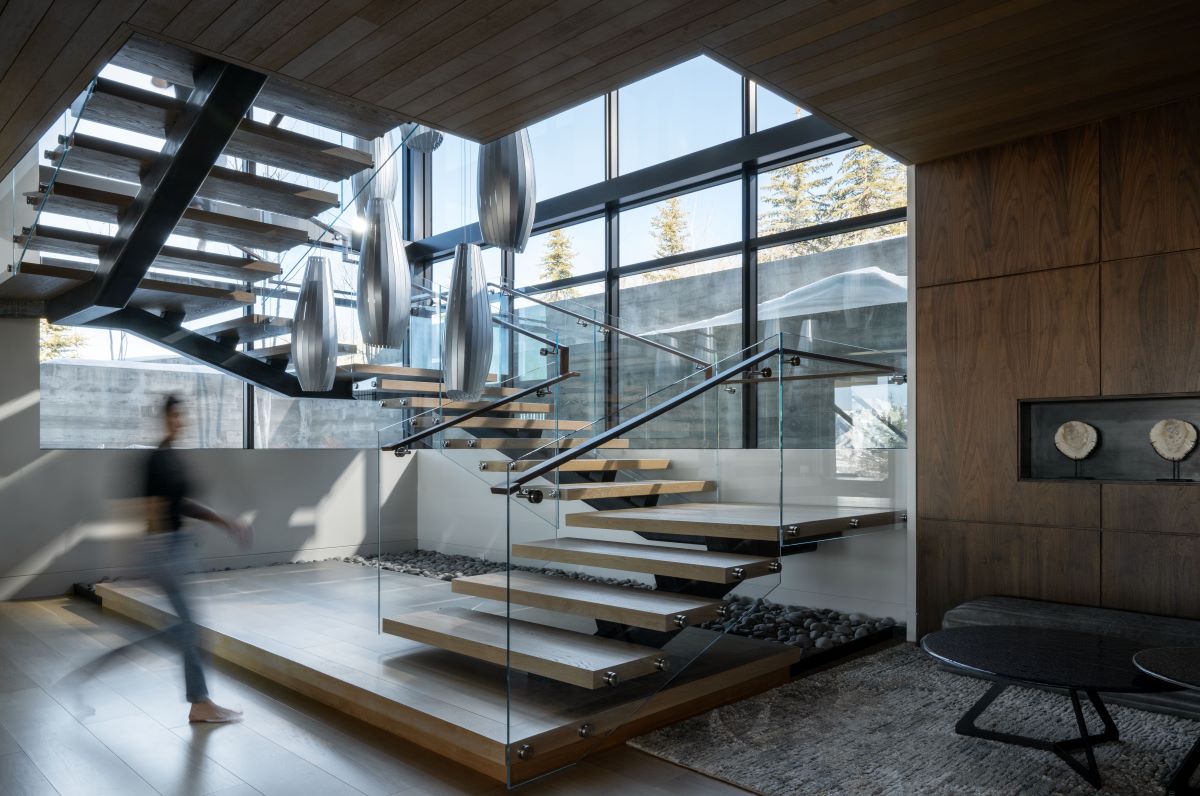
Photo courtesy of Marvin
The List
U.S. and Canada
U.S. National
U.S. Regional
- ABI Windows
- Air Master Windows and Doors
- All Weather Architectural Aluminum
- American Window
- ATI Windows
- Aurora Doors & Windows
- Castle Windows
- Climate Solutions Windows & Doors
- Comfort View Products
- Comfort Windows
- Elevate Windows and Doors
- Gerkin Windows and Doors
- Gilkey Window Company
- Glass Rite
- GreenEnergy Windows
- GreenWindows
- Ideal Window
- International Window
- Interstate Window & Door Co.
- Joyce Manufacturing Co.
- KHPP Windows and Doors
- Macro Windows USA LLC
- Mathews Brothers Co.
- MGM Industries
- Midway Windows & Doors
- Moss Supply Co.
- Northeast Windows USA Inc.
- NT Window
- Okna Windows Manufacturing
- Polaris Windows & Doors
- Premium Windows & Doors
- Regency Windows Plus
- Seaway Manufacturing Corp.
- Slocomb Windows and Doors Inc.
- Stewart Brannen Millworks
- Sun Windows and Doors
- The Coeur d'Alene Window Co.
- Thompson Creek Window Co.
- Trimlite LLC
- United Window & Door Mfg. Inc.
- Upstate Door
- Vector Windows Inc.
- Vinyl Kraft Window and Doors
- Vinylmax Windows
- Viwinco Inc.
- ViWinTech Window & Door Inc.
- Vytex Windows
- Wallside Windows
- Winchester Industries
- Window Mart
- YKK AP America
Canada Only
The May/June Digital Issue
More details about each of the 2025 Top Manufacturers on the List below are available in the May/June digital issue of Window + Door Magazine.
Photo below courtesy of Novatech Group