Improving Dark Color Consistency and Thermal Performance in Window Profiles
Demand for darker exterior window profiles grows across residential and commercial construction
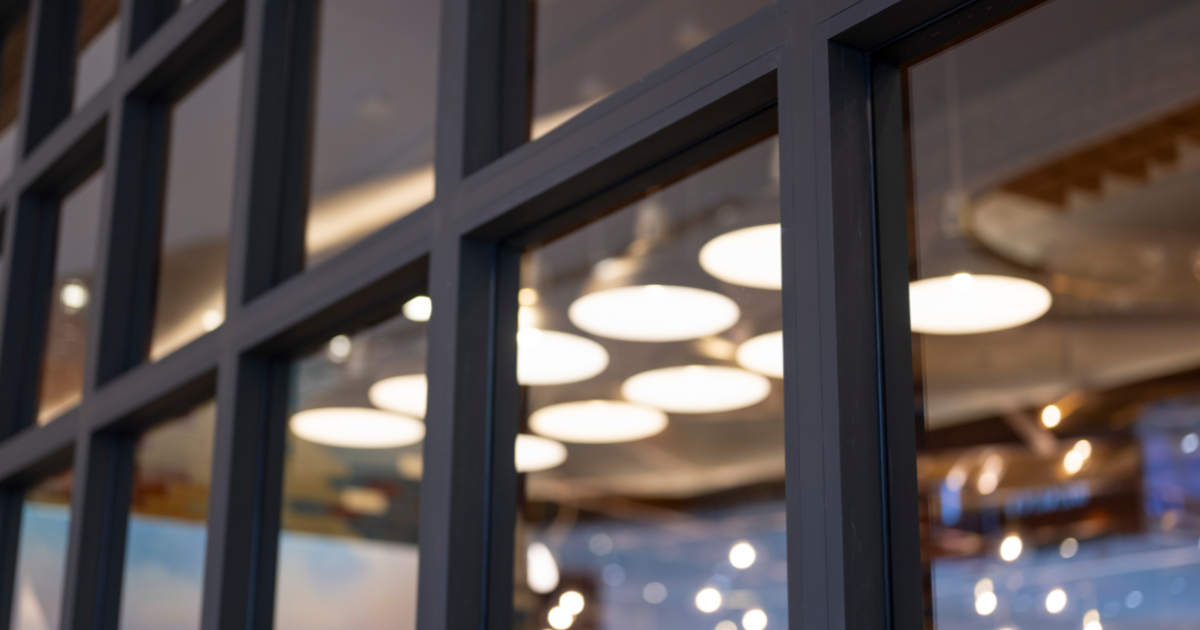
 Demand for darker exterior window profiles continues to grow across residential and commercial construction, increasing pressure on manufacturers to deliver systems that maintain appearance and thermal stability.
Black and other deep color profiles are becoming standard offerings across many residential and commercial exterior systems.
For manufacturers, this shift is not simply aesthetic. Failing to offer darker color options can limit competitiveness as builders, architects, and homeowners continue favoring bold, high-contrast exterior designs.
But darker profiles bring a different set of thermal, weathering, and color consistency challenges with them.
Darker colors absorb more solar energy, which can significantly increase surface temperatures in exterior applications. In PVC-based window systems, heat buildup can affect dimensional stability, thermal expansion, material behavior, and long-term weathering performance.
Material selection and formulation strategy can influence how darker profiles respond to prolonged exterior exposure.
Manufacturers also continue balancing pressure to maintain color consistency, improve processing stability, incorporate recycled content, and validate exterior durability across varying climates.
Those issues often surface quickly on the production floor. Color variation, processing instability, and repeated iteration cycles can impact throughput, increase waste, and slow speed to market.
Meeting validation requirements adds another layer of complexity. Window systems must satisfy established performance standards such as those defined by FGIA while also meeting internal expectations across engineering, manufacturing, and product development teams.
What’s Often Overlooked
It is easy to assume that darker color spaces simply introduce more risk. In reality, the challenge is rarely driven by color alone.
Performance outcomes are shaped by how multiple variables interact across material formulation, processing conditions, and system design. Pigment selection, dispersion quality, resin systems, additives, and processing conditions all influence how a profile performs under real-world environmental exposure.
Small variations in formulation or dispersion quality can influence both dark color appearance and thermal behavior.
Lab testing remains critical for validation, but it does not always capture the full range of environmental exposure conditions. In many cases, thermal or weathering issues are not identified until late-stage validation, when reformulation, retesting, or processing adjustments become significantly more costly and time-consuming.
That reality is pushing many manufacturers to evaluate thermal behavior and weathering performance earlier in the process.
What It Actually Takes to Go Dark
Expanding into darker color spaces requires a broader view of material behavior and system performance.
Thermal behavior is not a single-variable issue. Pigment systems, formulation strategy, and dispersion quality all influence solar absorption, which directly impacts surface temperature and dimensional stability.
Material selection matters too. Different compounds respond differently to UV exposure, temperature fluctuations, and environmental stress. Evaluating materials based on actual application conditions rather than isolated test results is essential for predicting long-term durability.
Manufacturers are also looking beyond individual components and evaluating how the full window system performs together. Interactions across lineals, capstock, reinforcement systems, and adjacent materials can significantly impact durability, consistency, and long-term appearance.
Moving Forward with Confidence
Darker color profiles are becoming an expectation across the window and door market. The challenge for manufacturers is not whether these systems can be achieved, but how efficiently they can move from development to production.
Manufacturers that evaluate thermal behavior, material selection, and integrated system performance together are often better positioned to reduce iteration, improve consistency, and move more confidently toward commercialization.
Explore how Americhem helped improve color consistency, processing stability, and long-term exterior performance in this ePVC capstock window lineal application.
For more information, contact Rick at rkeatley@americhem.com or visit www.americhem.com.