What Goes into Innovation in Factories and Product Enhancement
Industry leaders consider how automation can help companies scale efficiently
We all know that innovation is an important part of growth and advancement in our industry, as it is with many industries. However, we also know that the time and money it takes to properly and successfully innovate can be daunting. There is no one-size-fits-all solution to this problem, but the challenges and benefits of innovation in fenestration and glazing are certainly worth discussing.
Ray Garries of Miter Brands moderated a panel discussion about innovation in factories and offices during the Fenestration and Glazing Industry Alliance Annual Conference, and it was refreshing to hear two very different perspectives on things like automation, artificial intelligence and more. Our two panelists, Dr. Kamran Abedini with California State Polytechnic University, Pomona, and Joe Altieri, CEO of FlexScreen, focused on practical strategies for driving change in manufacturing.
Balancing human intelligence with artificial intelligence
Garries opened with some AI-positive remarks, noting that those in attendance needed to get on board, or get left behind. “We can’t talk about innovation without talking about AI,” he says. “It’s hard to keep up with its progress, what’s available. But if you’re not using AI, you will fall behind.”
Abedini countered with some caveats about AI, calling it “a beginning intelligence.” “Don’t forget to use your human intelligence, too,” he says. “Think about form and function at the same time when designing, when innovating. Think about the end result. Engineering folks need to think most about what they’ve done before and how to improve it.”
Abedini also spoke about the idea of the Puzzle Principle. After all, he reminded participants, a puzzle is a game that tests the ingenuity of the solver. “Start by asking the right questions,” he says. He added that innovation in products doesn’t fail in design. Instead, it fails at scale, cost and consistency. “Design products that are easy to make, assemble, install and maintain,” he recommends. And, when it comes to process over design, the process always wins. “It doesn’t need to be pretty, but it does need to be functional,” says Abedini.
Automation is a matter of timing and investment
Altieri spoke about his guiding principle when it comes to innovation: asking yourself, “if not now, then when?” His story of the success of FlexScreen is well known—his company worked quickly and efficiently to produce a flexible window screen. “Cost, labor and leadership collided at the same time when I invented that product,” he says. “We are good in this industry at optimizing what already exists. But that’s not the same as redesigning it.”
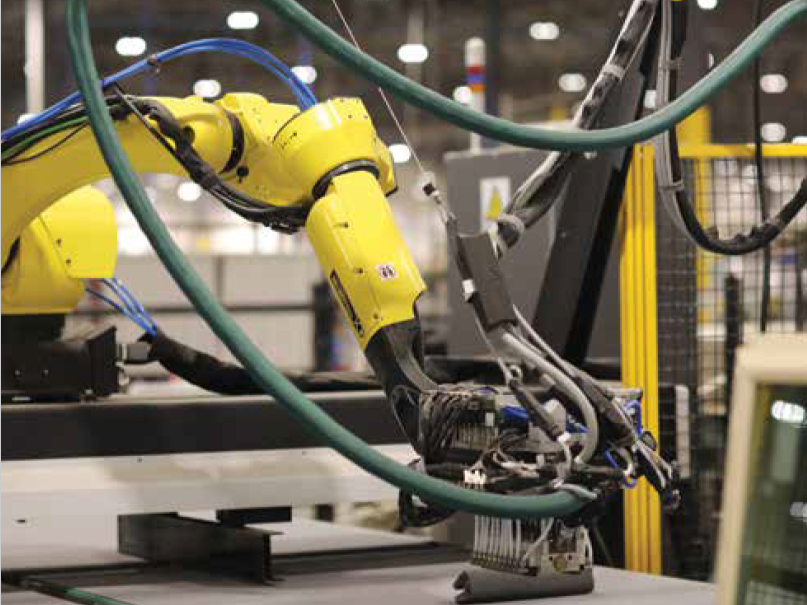
When taking the plunge toward automation, timing plays an important role. “We didn’t automate because we were excited about automation,” says Altieri. “We automated because the math stopped working. We couldn’t scale without it.” Today, his company is able to create a finished screen every 15 seconds, with four operators. The upfront cost of the machines needed was $6 million, or $2 million per machine. “Nobody pretended it was going to be an easy decision, but we bet on that chance,” he says. “We had to not be afraid to build the infrastructure.” The company chose to commit to all three machines. “After we had the first one in place, our licensees committed to their new automated lines,” he says. “We moved before we were forced to, and that timing mattered more than the technology itself.”
Altieri recommends that companies reflect on where they are on the adoption curve. “Early adopters move quickly when they see an advantage,” he says. “Laggards wait until there are no other options left.” In his moderating remarks, Garries reminds everyone that innovation makes all of us better. “It makes the industry better,” he says. “Innovation means making things happen, making ideas real.”