Darker Window Profiles Are Raising the Stakes for Thermal and Weathering Performance
Long-term performance remains a significant challenge
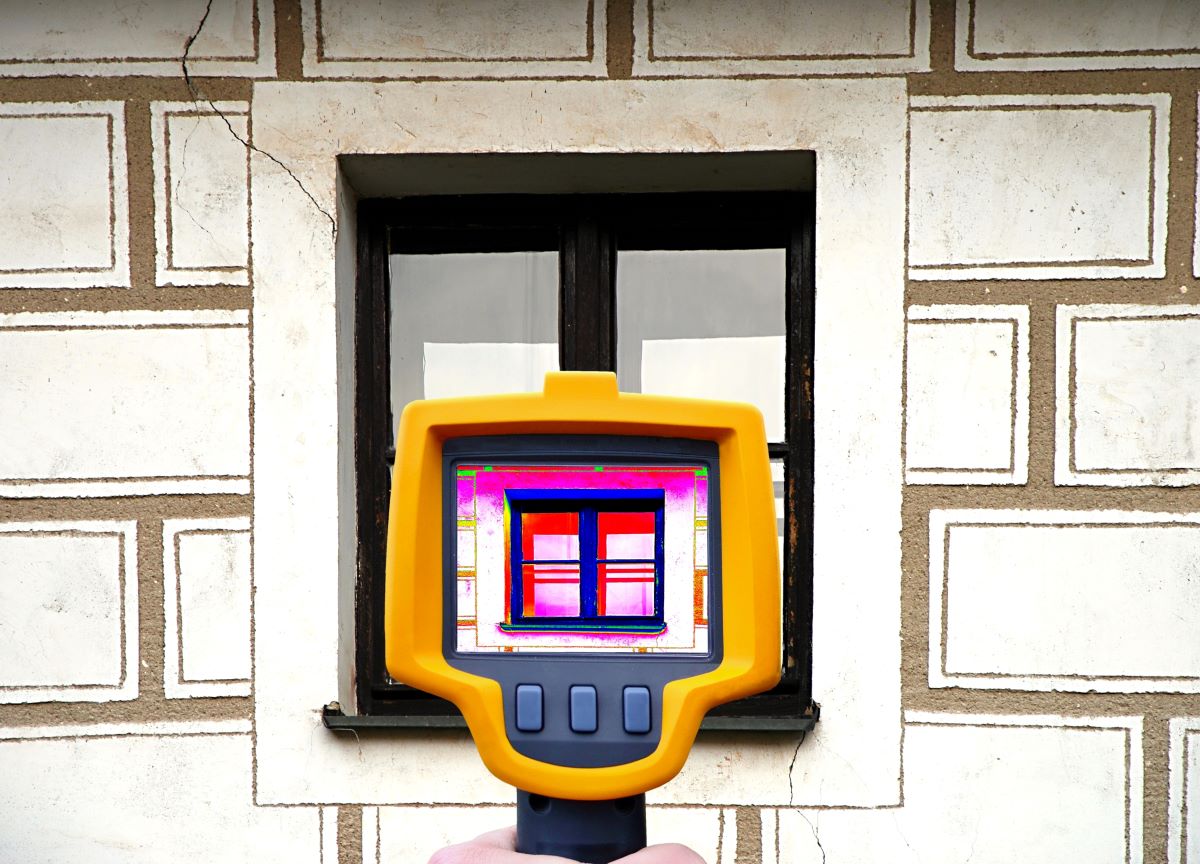
 Manufacturers can achieve darker profiles than ever before, but validating long-term performance remains a significant challenge.
In darker systems, performance is not determined by any single variable. It is determined by how the system is evaluated.
Heat buildup is central to that challenge, and how it is evaluated often determines how efficiently a program moves forward.
Why Heat Buildup Changes the System
Darker pigment systems absorb a higher percentage of incident solar radiation. That absorbed energy is converted into heat, increasing surface temperature relative to lighter profiles under the same exposure conditions.
Elevated surface temperatures increase thermal expansion, challenge dimensional stability, and place greater stress on material interfaces, particularly in multi-layer constructions.
In PVC-based systems, this does not result in immediate failure. Instead, the system becomes more dependent on formulation strategy, profile design, and environmental exposure conditions.
On the production floor, these effects often appear as tighter processing windows, greater sensitivity to color variation, and additional iteration to meet appearance and performance targets.
How Thermal Performance Is Typically Evaluated
Heat buildup is commonly evaluated using ASTM D4803, which measures temperature rise in PVC building products under solar exposure. The test provides a controlled method for comparing formulations and determining whether a system meets acceptable limits.
In many development programs, however, it is used as a later-stage checkpoint after formulations have already been defined and physical samples produced. If thermal limits are exceeded, reformulation and revalidation often follow, adding time, cost, and additional development cycles at a stage when project timelines are already established.
The limitation is not the test itself. The limitation is relying on it as the first point of insight.
Where the Gap Occurs
Standardized testing establishes comparability under controlled conditions. It does not replicate the variability of field exposure.
Solar intensity, installation angle, airflow, and surrounding materials influence how heat is absorbed and dissipated in service. Two systems that perform similarly in controlled testing can behave differently in service.
Formulation variables introduce additional variation. Pigment selection, loading levels, and dispersion quality all influence spectral absorption. Small changes in pigment systems or formulation approach can produce measurable differences in thermal performance and validation outcomes.
These differences are often not visible until late-stage validation.
Much of the development risk exists in the gap between controlled testing and field performance.
Shifting the Point of Insight
Manufacturers reducing development cycles are not changing the validation process. They are changing when decisions are made.
Thermal behavior is increasingly being evaluated earlier through formulation screening, predictive heat buildup analysis, and material characterization before full-scale formulation and extrusion trials begin. Higher-risk combinations can be identified before significant development resources are committed.
In our work with window manufacturers, earlier evaluation often includes screening pigment systems and formulations before full-scale trials begin.
Earlier insight allows teams to focus development resources on the most viable solutions before formal validation begins.
Thermal Performance Is Only Part of the Picture
Heat buildup and weathering are often evaluated as separate performance criteria. In practice, they are directly linked.
Higher surface temperatures can accelerate UV-driven degradation, increase color shift, and contribute to long-term surface deterioration. Evaluating weathering performance without accounting for thermal behavior produces incomplete data.
Manufacturers that understand how formulation decisions influence thermal behavior, and how thermal behavior influences long-term performance, move through validation with fewer surprises, fewer cycles, and greater predictability.
For teams working to identify thermal and weathering risks earlier in development, explore Americhem's analytical testing and material evaluation capabilities for exterior building products.
Rick Keatley is Sr. Research Engineer at Americhem, specializing in material performance, color consistency, and long-term exterior durability for polymer applications in the building and construction market.
For more information, contact Rick at rkeatley@americhem.com or visit www.americhem.com.