How Material Science and Recyclability Are Driving the Next Generation of PVC Windows and Doors
Advanced formulations, recyclability, and ongoing research and development are key to the modern-day window
Sustainability, performance and aesthetic options are increasingly intertwined in modern window design, creating a practical challenge that many manufacturers and fabricators are striving to overcome.
As demand grows for eco-friendly building products, manufacturers are tasked with creating the highest-performing formulations we’ve known to date. Recycling PVC materials without compromising durability, color or structural integrity is also high on the priority list. Achieving this balance requires advanced material science, rigorous testing and creative solutions, sometimes even borrowed from other industries.
From dark-colored profiles that resist heat and scratches to recycled materials that retain their strength through multiple cycles, material science innovations in the window and door industry are helping to ensure that sustainable choices do not come at the expense of long-term performance or quality.
The Requirement for Higher Performing Formulations
Today’s window and door formulations significantly exceed those of the past. Sustainability initiatives, heavy metal restrictions and hotter climates are just a few of the factors impacting these advancements. Global temperatures are rising, and prolonged outdoor conditions that consistently exceed 90°F and even 100°F are forcing manufacturers to create systems that can withstand increased ultra-violet (UV) exposure and temperature stress. Innovation is critical. Depending on the formulation, for roughly every 10°F increase in temperature, the rate of heat-related degradation can accelerate dramatically, in some cases nearly twofold.
In terms of overall temperature, once a window system exceeds 160°F, the polymer in the PVC can become mobile, allowing it to migrate away from protective pigments. Therefore, manufacturers must design profiles engineered to keep heat well below that threshold. The lower, the better. When that is not achievable through base PVC resin alone, formulations can be enhanced with inorganic additives to improve thermal stability.
In a typical window profile, PVC generally makes up roughly 79 to 81 percent of the formulation. Darker colors complicate this equation because increased pigment requires additional polymers, including a combination of acrylics and other modifiers. These materials are necessary to maintain color stability and ensure long-term performance, more of which must be added when the goal is a dark color. Ultimately, every component in the final formulation must be chemically compatible to ensure the system performs as intended over time.
Rising global temperatures and sustainability demands are also requiring manufacturers to incorporate additional stabilizers, antioxidants and UV absorbers into their formulations. While these additives are designed to work together, their effectiveness can vary depending on the pigments used. Each addition increases formulation complexity and cost.
At the same time, fabricators continue to push for lower-cost window solutions despite the fact that achieving higher performance requires more advanced and more expensive ingredients. Further complicating the challenge, some of the most effective stabilizers carry environmental, health and safety (EHS) concerns, limiting both their use and the range of available additives for PVC window and door formulations.
The Why: Darker Color Design Trend
The growing aesthetic preferences of homeowners and designers drive the design trend toward black and dark-colored windows. Like other visible elements of a home, such as siding, paint or appliances, color choice plays a major role in perceived style and value. This shift influences window fabricators to pursue dark color pigmentation without sacrificing performance, with some dedicating the majority of their research and development efforts to this challenge.
This trend shows no signs of slowing. It is reasonable to expect black and dark-toned profiles to remain dominant for the next decade or longer across windows, doors, fencing, and other building products. While carbon black has been used previously for these applications, it can contribute 40°F to 50°F of additional heat gain. As a result, reformulating these compounds is critical to meeting market demand while avoiding performance tradeoffs.
An Eye on Innovation Across Industries
Maintaining performance while innovating new products is rarely about finding a single, perfect solution. More often, it results from ongoing testing, research and extensive trial and error. For Deceuninck North America, much of that work involves examining how other industries address extreme heat and durability challenges.
In some cases, innovations originally developed for high-heat environments, such as military vehicle applications in desert conditions, have informed approaches to reducing heat gain in dark window profiles. Adapting these strategies has helped identify methods to lower surface temperatures and improve long-term stability in dark-colored systems. This cross-industry perspective influenced material development within the Eclipse line of windows and doors.
Ongoing work with inorganic minerals is also improving surface hardness and scratch resistance, an important consideration for darker finishes where blemishes are more visible. Success depends on selecting the right inorganic materials, those that will not melt or migrate, possess the appropriate particle size and morphology, and can withstand prolonged UV exposure within a PVC system.
Industries like automotive, aerospace, and other outdoor products continue to inform innovation on this front. Not every solution translates directly, but several approaches are showing significant potential when adapted for window and door applications.
Furthermore, as much as new formulations will drive innovation in the window and door industry, recycling and reuse remains a vital component to sustainable, high-performance products.
Recycled, Again
Maintaining physical properties as PVC is recycled multiple times is essential to keeping material out of landfills. In Europe, recycling expectations and infrastructure are far more advanced than in North America, with systems designed to keep PVC out of landfills through complex sorting, washing and purification processes that produce a clean recycled PVC. While North America is progressing in that direction, adoption remains limited by comparison.
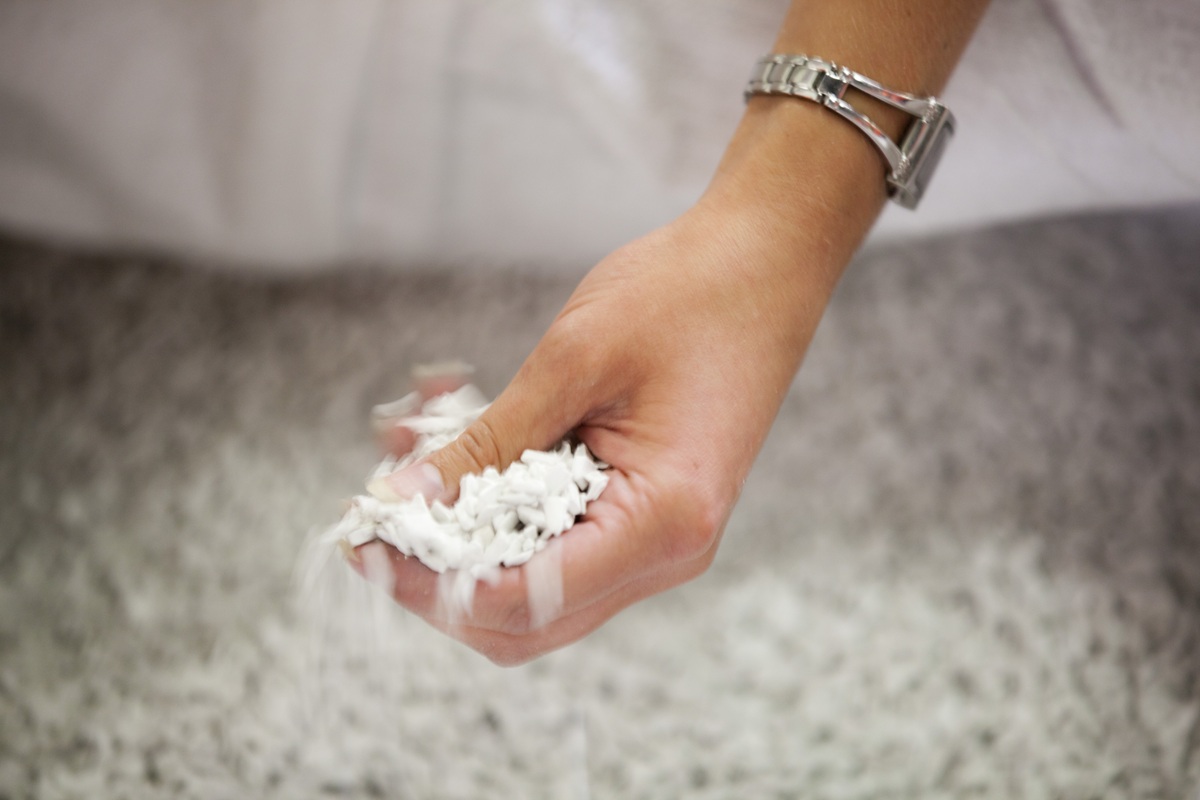
At Deceuninck North America, customer end-cuts are brought in for recycling. Window profiles made from this recycled material are tested to ensure they meet the performance standards of modern window systems. When developing formulations, the goal is to ensure materials can be recycled at least three times without measurable changes in performance. In practice, testing has shown that key performance indicators can be maintained even after six consecutive recycling cycles. By intentionally overengineering the formulation, these products can retain approximately 95 percent of their original performance after multiple recycling passes.
Deceuninck material scientists are also developing a high-performance “booster package” that introduces an additional layer of stability to recycled material, improving durability and long-term reliability beyond recycled PVC alone. When done correctly, recycled PVC can maintain the majority of its original performance across multiple processing cycles.
Future Chemistries
Material science advancements form the foundation of modern-day windows and doors, enabling products that meet aesthetic expectations while also delivering durability, resiliency and sustainability.
From reducing heat gain in dark-colored profiles to ensuring recycled PVC retains high performance, these innovations are solving real-world challenges fabricators, builders and homeowners face. By combining careful testing, creative formulations and insights from other industries, manufacturers are defining the future of fenestration with systems designed to perform for both occupants and the environment.