Standardizing Security Screens
A new industry standard brings performance-based testing, certification and consumer confidence to a product category that previously had no North American benchmark
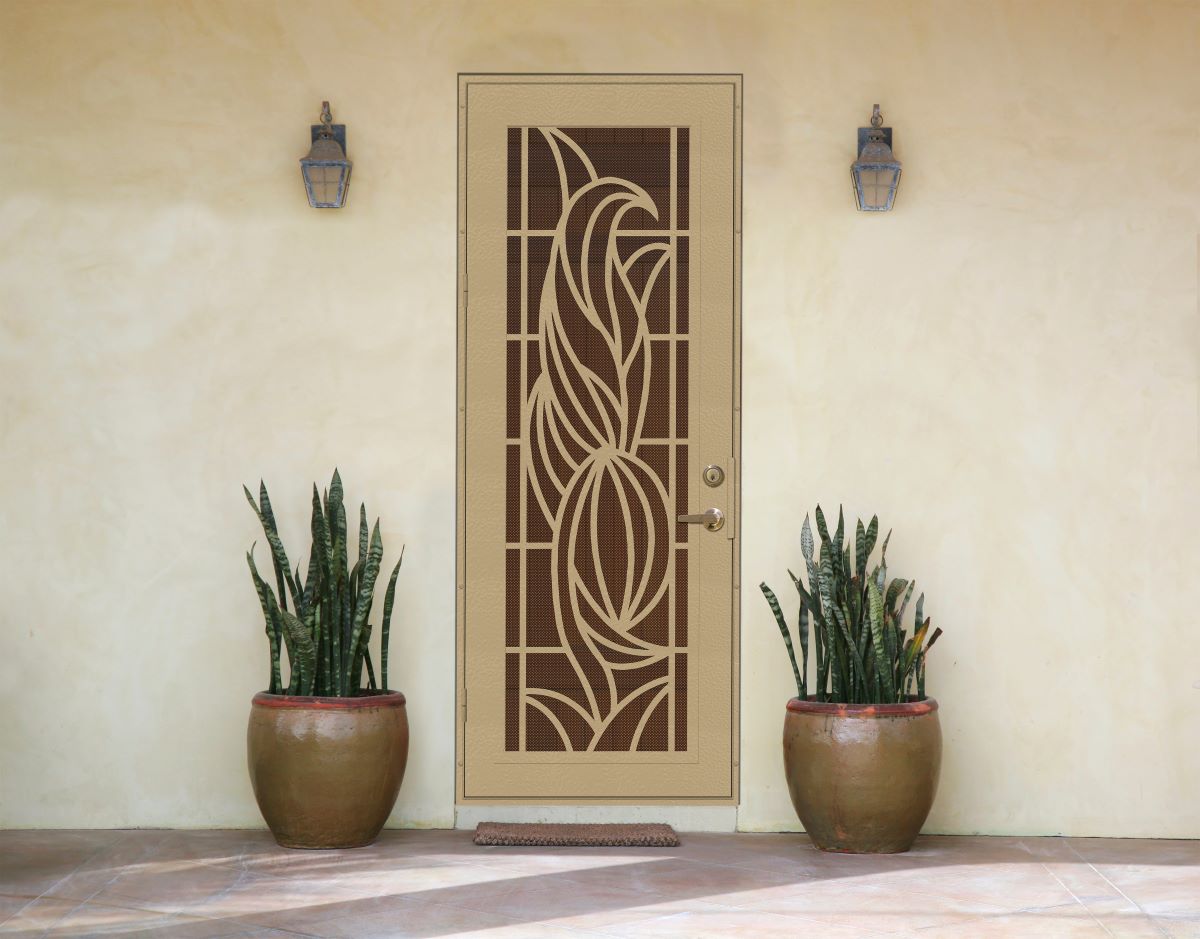
Above: The estimated total projected U.S. retail value for residential and commercial security screen for windows and doors could grow to more than $2.1 billion. Photo courtesy of UHD Innovations.
For years, the term “security screen” has been used without a consistent way to verify what that claim meant. No North American benchmark existed to define minimum performance expectations or to distinguish true security products from standard insect screens.
This changed in June 2025 with AAMA 1901, Specification for Security Screen Products, developed by the Fenestration and Glazing Industry Alliance (FGIA). The new standard establishes performance-based requirements for security screens used with residential windows and doors, creating a common reference point for manufacturers, specifiers and consumers.
“Anybody could call their screen a security screen until AAMA 1901 came along,” says Ray Garries, Global Fenestration Advisors’ founder and president.
Certification and consumer confidence
Security screen manufacturers meeting the AAMA 1901 specification soon will be eligible for certification. Jason Seals, FGIA Certification Services Manager, Fenestration, anticipates the certification program will be available by the end of June 2026. Independent of FGIA membership status, certified products appear in FGIA’s verified components list and are labeled as AAMA-certified products.
Like an AAMA Gold label on certified windows and doors, Garries explains, “The consumer will know it’s a certified product, which means it was built the right way, and it was inspected at the factory. You have quality assurance verified with that label, and that it was built to standards that give you confidence as a consumer.”
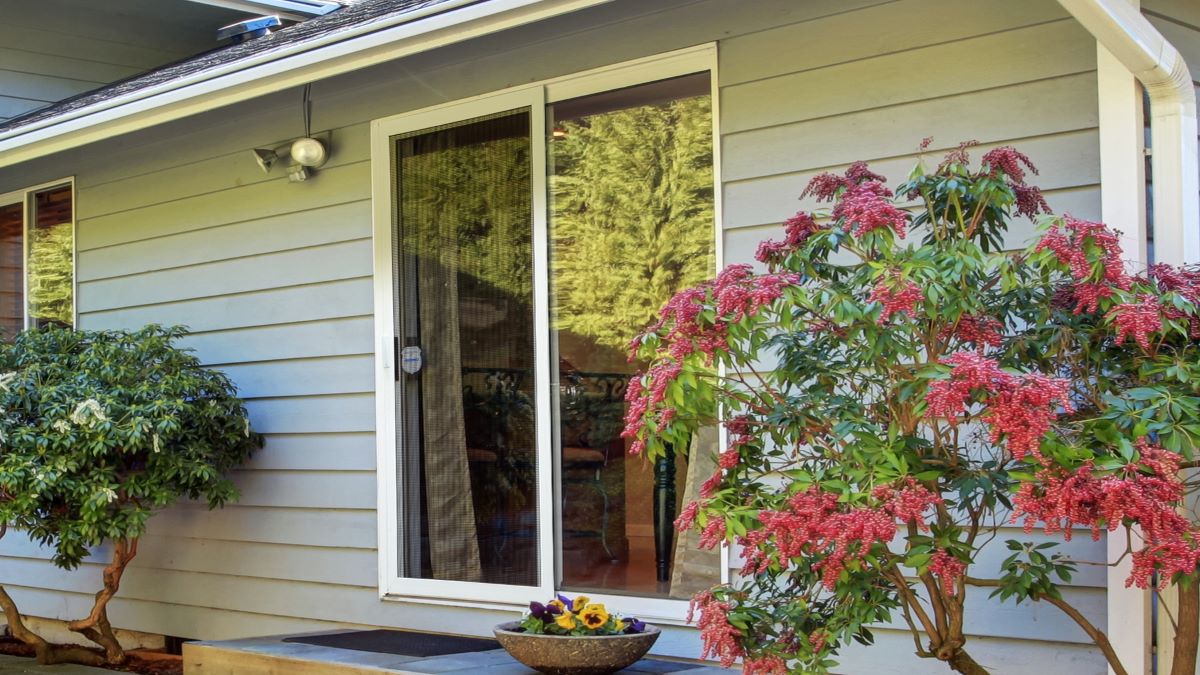
AAMA 1901 covers hinged and sliding security screen doors, and fixed, hinged and sliding security screen window products. It pertains to both aftermarket add-on products and OEM products integrated into prime doors or windows. Installed on the exterior, security screens are intended to protect glass from opportunistic intrusions while allowing ventilation and visibility.
Standards in development
The AAMA 1901 specification resulted from three years of effort by the FGIA Security Screens Task Group. Garries co-chaired the task group first with Jeff Bell, UHD Innovations’ president and CEO, and now with Dan Parrish, UHD Innovations’ vice president of product development.
Assisting FGIA, Bell presented a security screen specification from Standards Australia, which had been in use for more than 20 years. “Jeff brought a real vision to the task group,” notes Seals. “With permission, FGIA adapted the Australian standard with modifications for the North American market.”
“This was a real team effort,” shares Bell. “We invested the time to get the details correct and in complete alignment with the industry team of over 20 companies, followed by a successful ballot with FGIA membership.”
Garries says the task group “decided to make the first version simple: It’s pass/fail. But it’s not an easy test to pass.”
“AAMA 1901’s focus is to present a performance-based specification,” elaborates Seals. “It doesn’t matter what materials are used; it matters that it passes the test. There’s also no need to prescribe how it’s installed if it passes.”
Opportunity and scope
“The slowdown in housing turnover has put a lot of pressure on window and door sales,” observes Bell. “This type of add-on product creates incremental revenue without increasing unit sales. Plus, it meets a need that many consumers have for safety and security.”
The estimated total projected U.S. retail value for residential and commercial security screen for windows and doors could grow to more than $2.1 billion, according to commissioned research from UHD Innovations.
“Market growth is wide open,” says Adam Wilson, vice president of sales and new business development for Quanex, who participated in the FGIA Security Screens Task Group. “Security is an emotional purchase, which has no boundaries.”
“There are 100 different ways to get into a house,” acknowledges Seals. “The scope of AAMA 1901 doesn’t consider someone with a battery-powered angle grinder, the jaws of life, or hooking a truck winch onto a screen and driving away. It’s for security only.”
Testing and classifications
Forced-entry performance requirements for windows and doors are described in AAMA/WDMA/CSA 101/I.S.2/A440 - North American Fenestration Standard/Specification for windows, doors, and skylights (NAFS). “NAFS excludes glazing impact. It considers someone pushing, pulling and prying to try to gain access through a window or door without breaking the glass,” says Seals. “AAMA 1901 concentrates on the security screen and its role in protecting the glass when someone is willing to break it.”
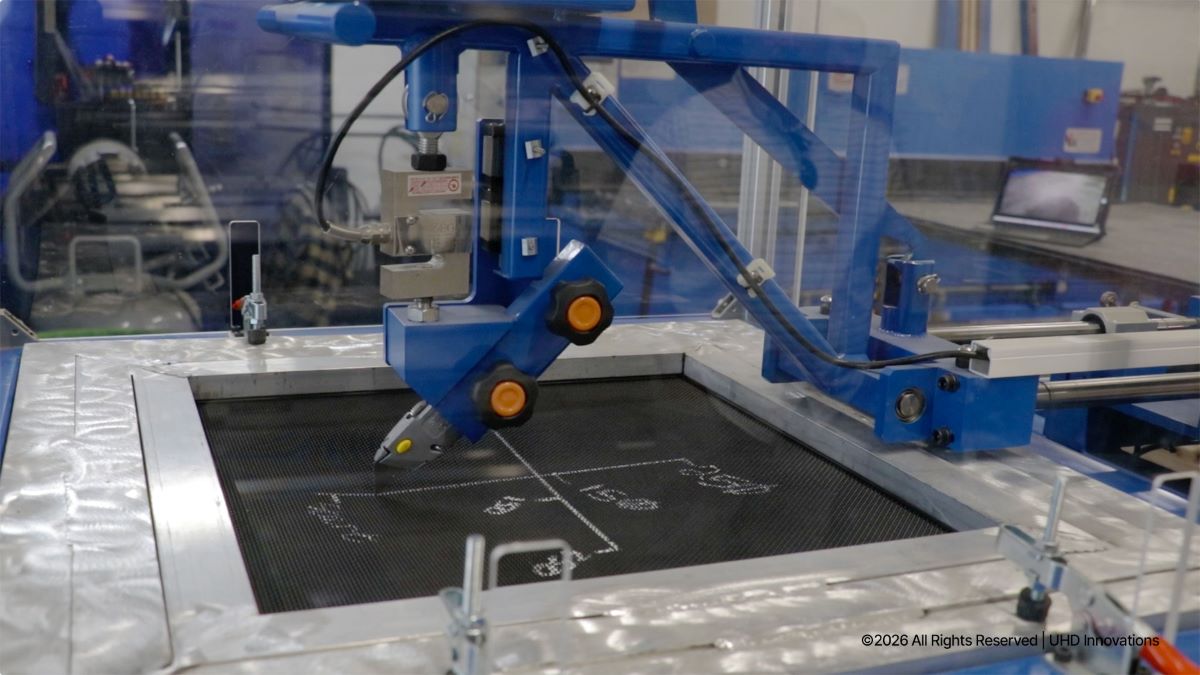
AAMA 1901’s testing is conducted on the screen material and on the window or door screen assembly. Assembly testing simulates repeated impact and forced-entry attempts, followed by prying and pull tests at locking points. Additional shear and knife shear testing of the screen material is required.
The two screen material types are: Type 1 screen material has openings small enough to prevent an arm, but too large to prevent insects from passing through. Type 2 screen material is small enough to prevent many small insects.
The three screen assembly classes are: Class A - permanent/fixed, Class B, permanent/operable, and Class C removable/operable. Class B and C operable products must be capable of being unlocked and opened with keys, tools, etc.
Near and future applications
Currently, the FGIA Security Screens Task Group remains focused on gaining traction for AAMA 1901 and finalizing certification. “Eventually, we want to get it in NAFS,” says Garries. “NAFS has many different components and tests. When it’s in NAFS, it can be referenced in a building code. Then, it’s very clear to the builder: if you want to put a security screen in, it’s got to meet 1901, and it’s got to be certified and labeled—just like a window—to make sure it’s safe. We have many tasks to complete before asking for NAFS inclusion, but it will be soon.”
Through AAMA 1901’s balloting process, Garries and the task group received hundreds of comments. “Suggestions included expanded performance levels and nonresidential applications, and we are reserving those for later versions,” he recalls.
Addressing safety, AAMA 1901 emphasizes compliance with egress, ASTM F2090 fall protection, NAFS, codes and other project-specific requirements.
Beyond fall protection, Parrish is leading an ASTM task group to develop a new test method evaluating the heat attenuation and ember resistance of noncombustible screens over windows and doors. He said the ASTM task group plans to send the first draft ballot in September 2026.
Referencing wildfire studies, he explained, “Many times the glass will break, or window framing materials can soften, allowing glass to become dislodged. And then, that’s one of the first points of fire entry that will cause you to lose a home. Our goal is to attenuate the heat first and foremost with the screen mesh, which, in theory, could attenuate about 50% of the heat.”
Along with property protection, manufacturers see other consumer benefits for security screens. For example, UHD Innovations’ research projected the $109.6 billion U.S. pet industry could support an addition $1 billion of incremental retail sales in this product category. Bell says, “There’s no standard around pet resistance, other than general durability claims. But, we know if it’s security proof, it’s going to be pet proof. It’s another aspect of the multi-use benefits of these products.”