Behind Black and Bronze Vinyl Windows
How coextrusion, lamination and testing technologies merge design and performance
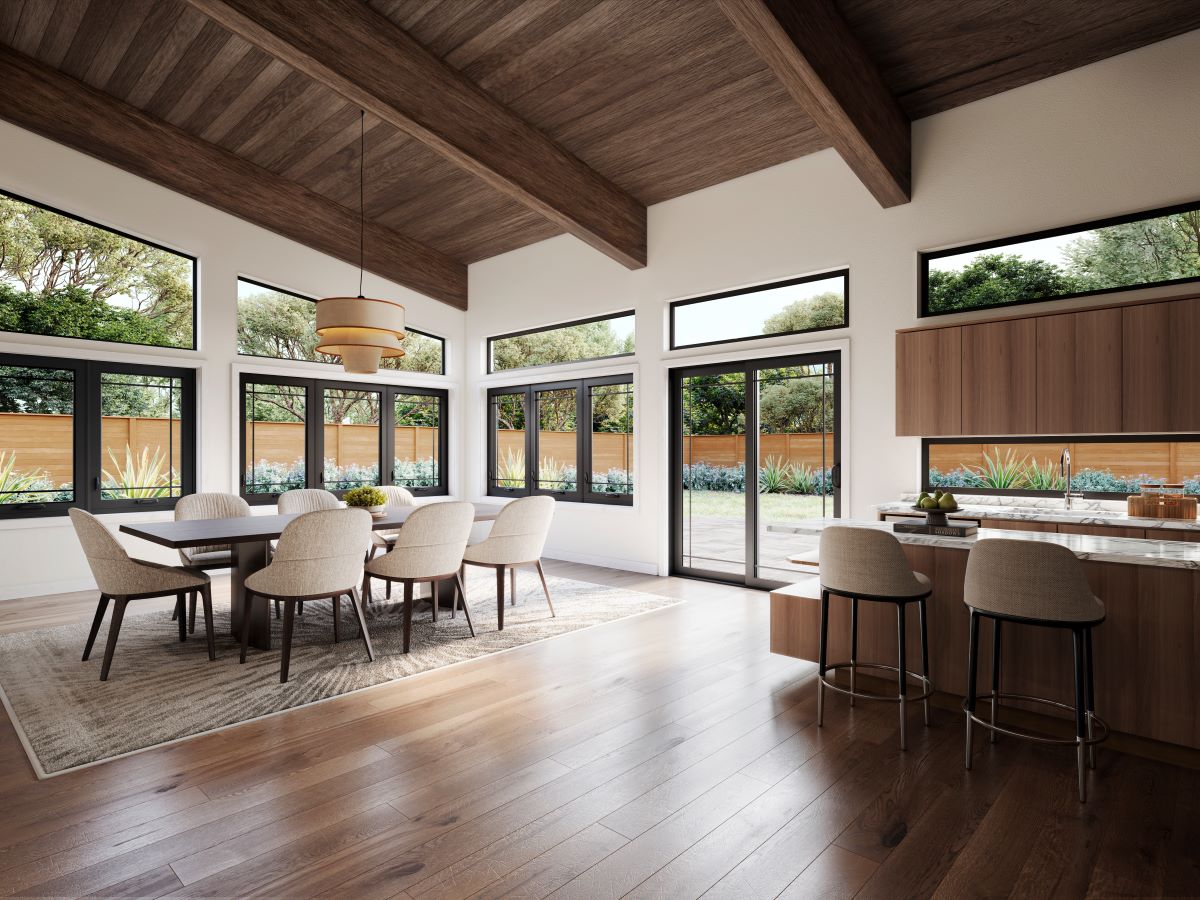
Black and bronze windows have become a hallmark of modern residential design. But as these darker finishes have gained traction, they’ve also presented some performance challenges for manufacturers and builders. Heat absorption, fading, and surface durability all come into play when moving beyond traditional white vinyl.
Window manufacturers have to make sure dark finishes hold up as well as white vinyl over time, which presents technical challenges because dark colors behave differently than light ones They absorb more heat, show scratches more easily, and are more prone to color fading if the materials aren't properly engineered.
Even paint formulated to adhere to vinyl can get scratched, revealing the white substrate. Then there's UV exposure; dark pigments can fade quickly without protection. And because dark profiles can reach surface temperatures 50 to 60°F higher than the surrounding air, that heat buildup stresses the material, affecting dimensional stability and long-term performance.
The industry is meeting those challenges through the advancement of lamination and coextrusion technologies. Both are engineered solutions that combine color and performance.
Lamination starts with a standard vinyl extrusion, which is then covered with an acrylic film that bonds to the surface. That film provides the color and acts as a protective barrier. The acrylic layer is highly resistant to scratching, fading, and heat buildup, so it maintains its color and gloss for long-term durability. It also performs well in tough climates where temperature swings and UV exposure can be punishing.
Meanwhile, coextrusion fuses two materials together during the extrusion process. An outer layer of colored vinyl is bonded to a white substrate as it comes out of the die. That outer layer is formulated with advanced pigments that reflect heat and resist UV degradation. Because the color is part of the profile itself, it’s highly resistant to chipping or peeling, helping maintain its appearance over time.
Testing validates long-term performance of these technologies. We start with small-scale testing (ASTM D4803) to measure heat buildup under controlled conditions. Then we move to full-scale thermal cycling tests (AAMA 1506), which expose complete window units to infrared heat to ensure they maintain structural integrity without warping. Finally, we do extended field testing in high-stress environments—like the Arizona desert—to evaluate real-world color retention and material performance. Those results give us confidence to stand behind the product in any climate zone.
The bottom line is that advanced finishes aren't just about aesthetics; they're about reliability and longevity. With lamination and coextrusion, you're getting dark finishes that perform on par with traditional white vinyl in terms of durability, thermal stability, and colorfastness. That translates to fewer callbacks, fewer warranty issues, and an easier installation experience. Black and bronze windows aren't just a passing trend. With the right manufacturing technology behind them, they represent a significant and lasting evolution in vinyl window and door design.
Key Takeaways
Without the right technology, dark-colored vinyl windows face unique technical challenges, including heat absorption (50-60°F above ambient), increased scratch visibility, and accelerated UV degradation.
Lamination and coextrusion technologies have become the industry standard, offering integrated solutions that bond color and protection at the molecular level.
Rigorous testing protocols (ASTM D4803, AAMA 1506, and real-world field testing) validate that advanced dark finishes now match white vinyl's durability and thermal performance.
Modern dark finishes reduce warranty claims and callbacks while enabling dealers to confidently sell premium aesthetics with long-term performance guarantees.