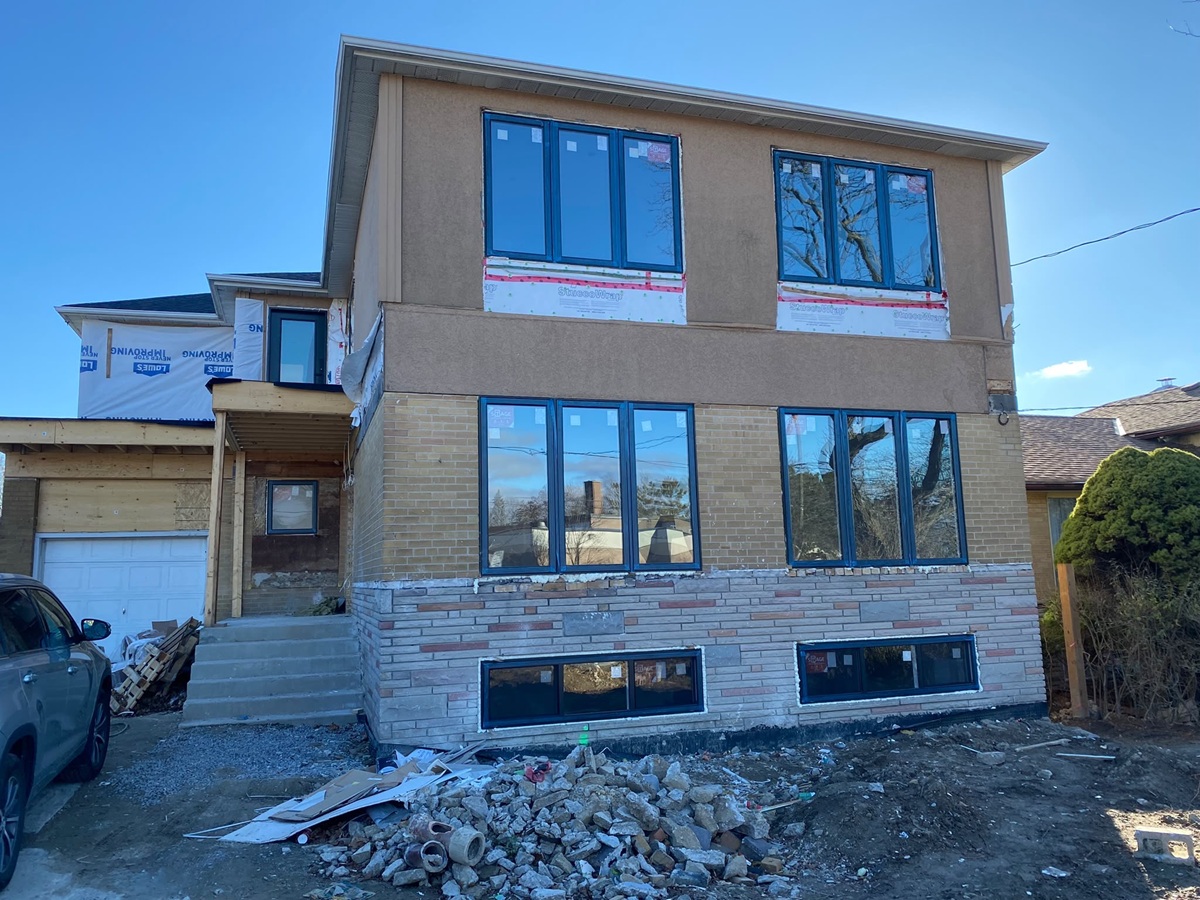
Where Patio Door Installations Fail in Freeze-Thaw Climates
Manufacturers see the warranty claims. Installers see the callbacks. The two rarely connect, and the gap between them is where most cold-climate patio door failures actually start.
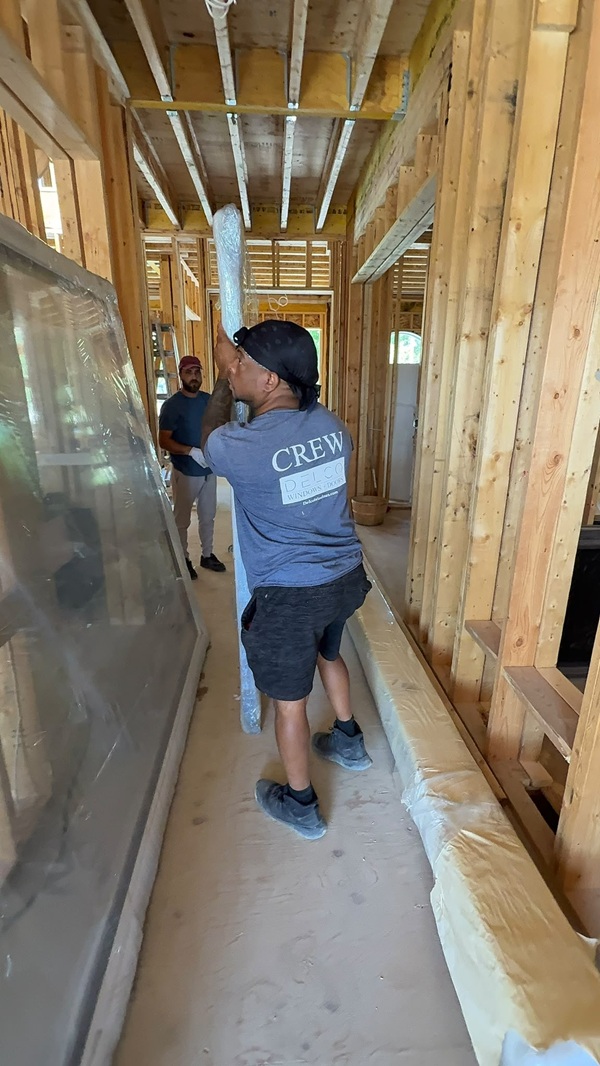
A patio door that starts drafting in year three rarely fails for one reason.
The manufacturer logs a hardware claim, or a sealed unit claim. The installer logs a callback about cold air near the threshold. Neither side has the other's data. So the same failure repeats across jobs, and both parties keep working on separate halves of it.
We manufacture in Ontario and install what we build. That puts both sets of records on one desk. What follows is what shows up in the field but rarely reaches a warranty database.
Cycle count matters more than low temperature
Cold alone is manageable. Repetition is what wears an assembly down.
A door in southern Ontario can pass through the freezing point dozens of times between November and March. Each pass moves the frame, the sash, and the rough opening by different amounts. Vinyl moves more than the framing around it. Aluminum moves faster than either.
A compression seal recovers well at 10 degrees. At minus 20 it recovers more slowly, and after several hundred cycles it may not return fully at all. The gap that opens is small. It is also permanent until someone replaces the weatherstripping.
Then there is water. A contractor on ContractorTalk described the sequence well: snow builds up in the lower corners of the door, a little warm air escapes past the seal, the snow melts, and the meltwater trickles inward. On the next cold night, it freezes where it stopped. Repeat that for a season and the ice works at the joint from the inside.
That is the freeze-thaw problem in one sentence. A minor air leak becomes a water path, and the water becomes a wedge.
Three places the handoff comes apart
- The rough opening. Specification sheets assume square. Older housing stock is not, and a five- or six-foot patio door span will usually show an arc in the sill. As one installer put it on a trade forum, a rough set should never be treated as a dead set for a component like a door.
What happens next is where the trouble starts. The installer shims and fastens to pull the frame true. Over-tightening at the jamb bows the frame slightly. Two winters later the sash binds, the roller wears unevenly, and it reads as a hardware fault. The claim goes back to the manufacturer as a roller failure. It was a tolerance problem.
- The sill pan. Codes require doors and windows to be flashed. Enforcement is inconsistent, and in replacement work a sill pan is often treated as optional because the existing opening looks sound.
In a freeze-thaw climate it is the piece that decides whether incidental water drains or sits. The technique that holds up is straightforward: continuous sealant along the subfloor, with a short void left in the exterior bead near each end so water has a route out. Non-compressible shims. Low-expansion foam, not standard.
Blocked weep paths cause a lot of avoidable damage. One homeowner posting about a previous owner's install described weep holes sealed shut and the underlayment rotted beneath.
- Air sealing on the wrong side. This one is underrated and it comes from Jon Eakes, who has spent decades on cold-climate housing in Canada.
Air travels into the wall cavity through the siding, past the caulking between the door and the cladding, and then blows in behind the frame. Sealing the exterior perimeter does not stop it. In an existing house, the seal has to be continuous on the inside edge of the frame.
Drilling and injecting foam after the fact is a common repair. It often leaves a gap somewhere along the run, which is enough for the leak to continue. Eakes documented a case where the dealer replaced the weatherstripping, adjusted the doors, and foamed the perimeter. The draft stayed. An independent inspector signed off on the install. Two years later the homeowner still had the problem.
Nothing in that sequence was careless. Each step addressed a plausible cause. The actual path was never isolated.
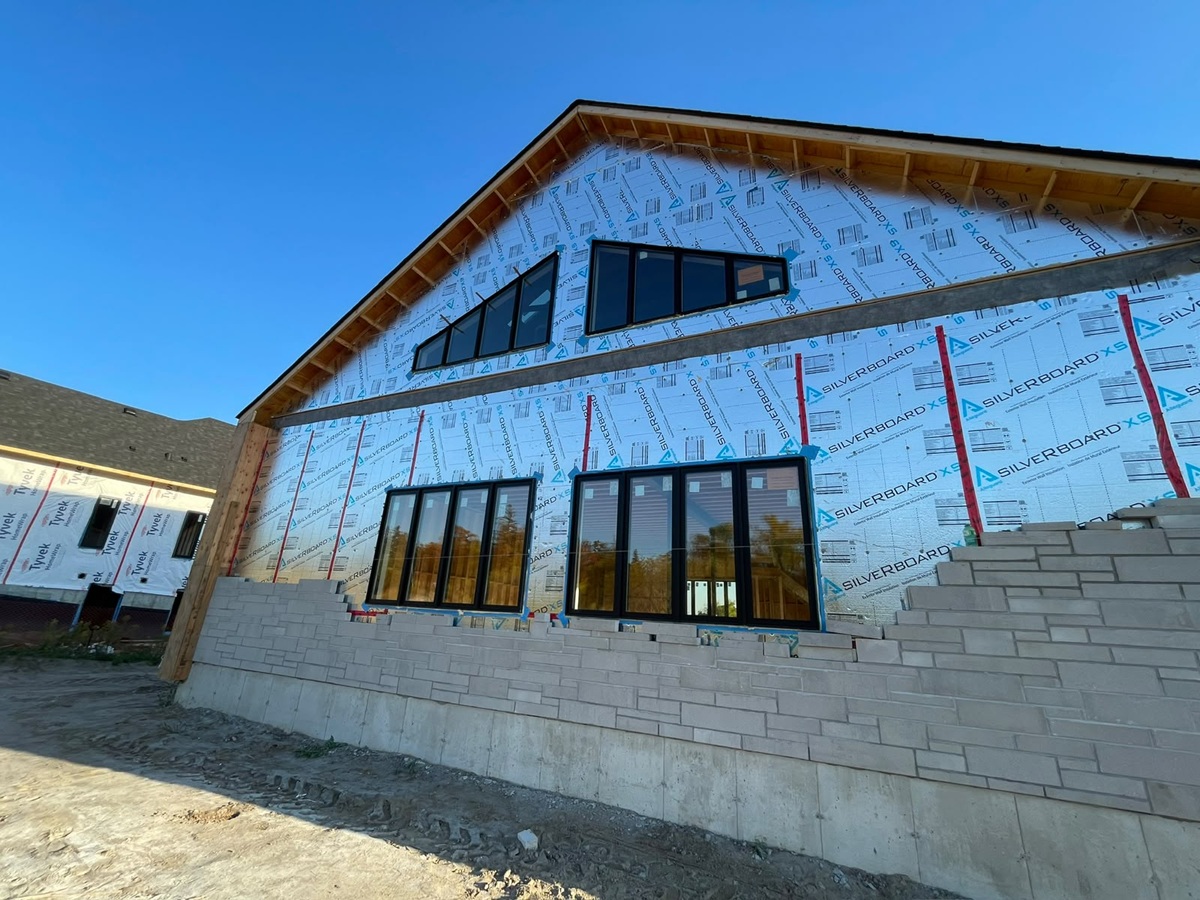
What the seal type changes
Most sliding doors rely on compression. The sash presses against weatherstripping, and performance depends on the frame staying true across seasons.
A lift and slide works differently. Turning the handle raises the sash clear of the seal to move it, then lowers it onto the seal when closed. Sealing is mechanical rather than dependent on constant pressure, so gradual frame movement affects it less. It is one of the configurations we cover in our patio door installation in Toronto work, and the difference shows up in the callback record rather than the spec sheet.
That does not make it the answer for every opening. It costs more, it weighs more, and the rough opening still has to be right. But on a wide span in a house that moves, the difference shows up around year five.
The weatherstripping choice is worth checking too. Brush alone lets air through. A plastic fin alone folds over under pressure. A brush with a flexible fin running through the middle holds up to both.
Three things a manufacturer can do
- Write retrofit guidance, not just new construction guidance. Most installation documents assume a square opening and a clean substrate. Dealers working on 30-year-old housing stock are adapting onsite with no documented method. Give them one.
- Feed callback data back into warranty analysis. Roller claims and draft callbacks on the same model are often the same failure seen from two angles. The pattern only shows when both data sets are read together.
- Publish a pre-install checklist for the opening. Level and square measured and recorded. Sill arc noted. Sill pan confirmed. Weep path clear. Interior air seal continuous. Five checks, done before the door goes in, prevent most of what comes back later.
The failures are predictable. The information needed to predict them already exists. It just sits on two sides of a handoff that does not happen often enough.