Ceramic Printing on Glass
Performance, design and architectural opportunity
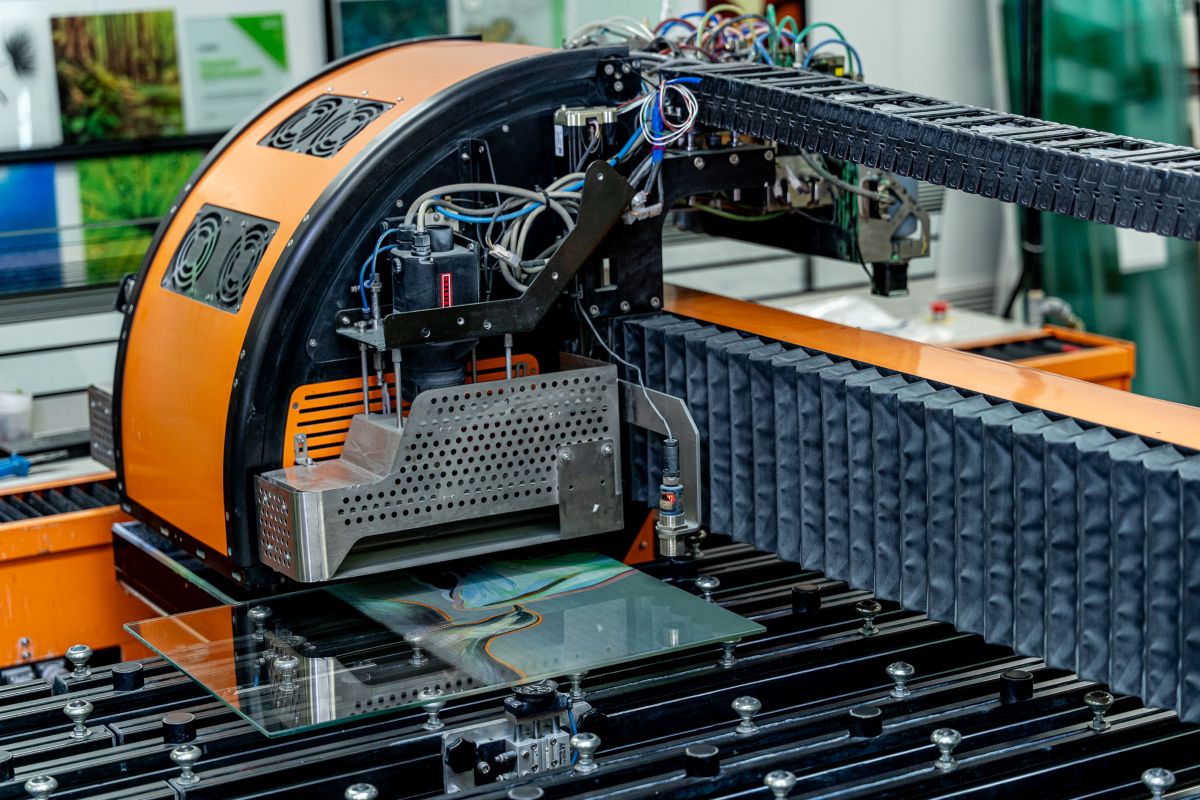
Ceramic printing on glass has evolved from a niche decorative capability into a valuable tool for glass manufacturers and glazing professionals. As architects increasingly demand customization, performance and visually distinctive building envelopes, ceramic printing has emerged as a solution that combines aesthetics with durability and functionality.
No longer limited to simple patterns or opacity treatments, modern ceramic printing technologies allow manufacturers to create sophisticated graphics, textures, gradients, and imagery directly onto architectural glass. For fabricators and glaziers, this capability opens the door to expanded project opportunities, greater design flexibility and added value across a wide range of applications.
The benefits of ceramic printing
One of the defining characteristics of ceramic printing is its exceptional durability. During fabrication, ceramic pigments are permanently fused into the glass during heat treatment, becoming part of the glass surface itself.
This process delivers several long-term performance advantages:
- UV Resistance: Ceramic printed surfaces withstand prolonged sun exposure without significant fading.
- Weather Resistance: Printed glass maintains its appearance despite exposure to moisture, temperature fluctuations, wind and pollution.
- Scratch and Abrasion Resistance: Because the design is fused into the glass, it is more resistant to wear than applied films or surface graphics.
- Chemical Resistance: Ceramic printed glass performs well in environments requiring frequent cleaning.
- Long-term Color Stability: Properly fabricated ceramic printed glass can maintain its appearance for decades.
The evolution of ceramic printing
Historically, ceramic printing was primarily used for applications such as glare reduction and bird-friendly glazing. Printed designs were limited to a single-color and repetitive patterns.
Today’s digital ceramic printing technologies with multi-color capabilities have dramatically expanded what is possible. Advanced printing systems can reproduce highly detailed graphics, variable opacity levels, custom artwork and even photographic-quality imagery. As a result, architects can use glass not only as a functional building material, but also as a medium for privacy solutions, branding, environmental performance and artistic expression.
For manufacturers, ceramic printing has become a valuable service that helps differentiate capabilities in a competitive marketplace. For glazing contractors, it provides additional options for meeting increasingly complex architectural specifications.
Understanding the process
Ceramic printing involves applying ceramic-based inks directly onto the glass surface before heat treatment. During tempering, the ceramic material permanently fuses with the glass, creating a durable finish that resists fading, scratching, weathering and chemical degradation.
For optimal long-term performance, ceramic ink is applied to sub-surfaces of the glass to protect the design from direct exposure to the elements. For example, on exterior railing lites, the ink is typically positioned on the balcony side of the glass, helping shield the design from weathering and environmental wear. In insulating glass units (IGUs), the ink is generally applied to the second, third or fourth surface, where it remains protected from direct environmental exposure.
Benefits for manufacturers and glaziers
Beyond aesthetics, ceramic printing delivers practical advantages throughout the design and construction process. One of the most significant benefits is creative freedom. Architects are no longer limited to standard patterns and repetitive designs. Instead, they can incorporate custom patterns, imagery and privacy treatments directly into glazing systems.
Digital printing also streamlines project development. Because designs can be modified digitally, glass manufacturers can respond more efficiently to design revisions. This flexibility can reduce lead times, simplify mock-up production and improve collaboration between architects, fabricators and contractors.
Interior applications continue to expand as well. Decorative partitions, feature walls, elevator lobbies, railings and privacy glazing increasingly utilize ceramic printed glass to create visually distinctive spaces while maintaining durability and ease of maintenance.
Supporting the future of architectural glass
As the architectural glass industry continues to evolve, ceramic printing is positioned to play an increasingly important role in façade innovation and building design. Architects are seeking materials that deliver sustainability, performance, customization and visual impact. Ceramic printing helps achieve these goals while providing manufacturers and glaziers with opportunities to expand their capabilities and competitive positioning.
For manufacturers, investing in ceramic printing can open doors to higher-value projects and strengthen relationships with architects and glazing contractors. For glaziers, understanding the capabilities and performance characteristics of ceramic printed glass enables stronger collaboration during specification and project execution.
As demand grows for more sophisticated building envelopes and visually distinctive spaces, ceramic printing will continue to shape the future of architectural glass by combining design innovation with the durability and performance of today’s construction environment demands.
Real-world applications
The use of ceramic digital printing in commercial settings continues to gain momentum. A notable example is the Homewood Suites Hotel in Montreal, where a nine-story-tall glazed ceramic mural on the hotel’s façade welcomes guests with a hummingbird and an assortment of flowers, produced by Novatech using Ceraprint digital ceramic printing technology.
Ceramic printing is also gaining traction in residential and consumer-focused products. One example is the biophilic Zen doorglass collection from Novatech, which combines Ceraprint digital ceramic printing with traditional silk-screening techniques to create realistic wood-grain patterns. The result is a glazing solution that brings highly realistic natural design elements into the home while maintaining privacy and allowing natural light to enter the space.